Recently, the Ministry of Emergency Management released multiple typical cases of illegal chemical production. These cases not only severely disrupted market order but also exposed the extremely hazardous safety environment at illegal production sites. In these dens lacking basic safety facilities, workers are often in dangerous situations without any protection, posing a huge threat to their lives and health.
The most prominent risk at illegal chemical production sites is the fugitive emission of hazardous gases. Due to the lack of compliant ventilation and detoxification facilities and process controls, the working environment is often filled with high concentrations of chemical vapors and dust. In such enclosed or semi-enclosed spaces, personnel are highly susceptible to acute poisoning, and even serious accidents such as fires and explosions can occur.
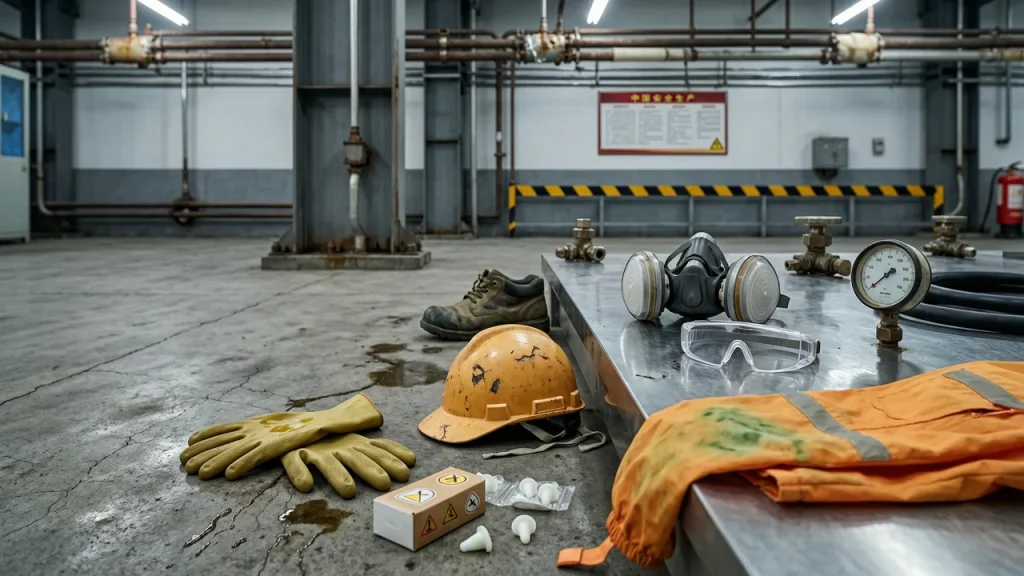
In the face of complex chemical gas environments, appropriate respiratory protection is the core of ensuring personnel safety. Ordinary medical masks or particulate respirators cannot filter toxic gases. Enterprises must equip employees with respiratory protective equipment with dedicated gas filter cartridges based on the types and concentrations of chemicals at the site. In environments where oxygen concentration is unknown or oxygen-deficient, positive-pressure self-contained breathing apparatus must also be used to cut off the route of toxic substance inhalation at the source.
In addition to respiratory risks, physical and chemical splash injuries at chemical sites cannot be ignored. Illegal production sites often have chaotic material stacking, and when container leakage or minor reaction upsets occur, chemical splashes are highly likely. Therefore, standardized head and face protection is crucial. Safety helmets with face shields can not only resist impact from falling objects but also effectively protect the face and eyes from corrosive liquid injuries.
These typical cases also serve as a wake-up call for EHS management in enterprises. One reason illegal production persists is the laxity of frontline site management. Safety management personnel must incorporate the correct fit and use of PPE into the focus of daily inspections, eliminate the phenomenon of having equipment but not wearing it or wearing it incorrectly, and ensure that protective measures are implemented in every operation step.
Workplace safety requires consistent legal compliance. Chemical enterprises should regularly assess occupational hazards at the work site, update PPE requirements as conditions change, and train employees in correct fit, use, inspection, and maintenance.
News source:Ministry of Emergency Management of the People's Republic of China, 2026-07-08: "Ministry of Emergency Management Releases 3 Typical Cases of Illegal Chemical Production 2026-07-08 18:46". This article only interprets PPE knowledge based on public news topics.