



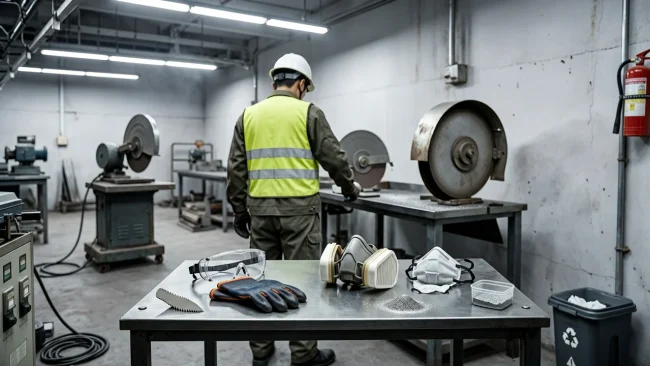
How to Choose Eye and Face Protection for Grinding, Cutting, and Dusty Environments
Starting from splash, dust, and impact risks, this article outlines the approach to selecting eye and face protection and the key points of on-site management.


Starting from splash, dust, and impact risks, this article outlines the approach to selecting eye and face protection and the key points of on-site management.
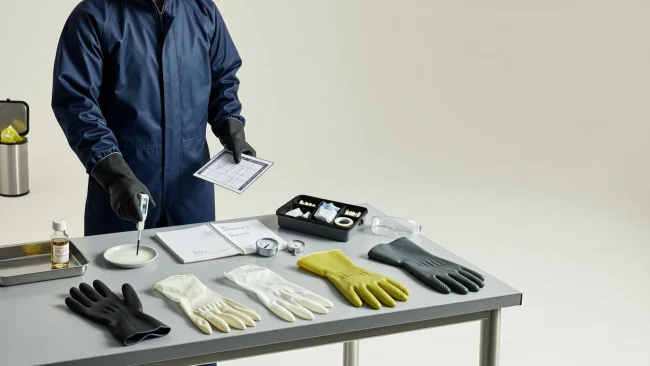
For hand and body protection in chemical operations, the focus is not on piling up equipment, but on identifying exposure routes, task duration and spill risks, and establishing a practical approach to selection and doffing management.
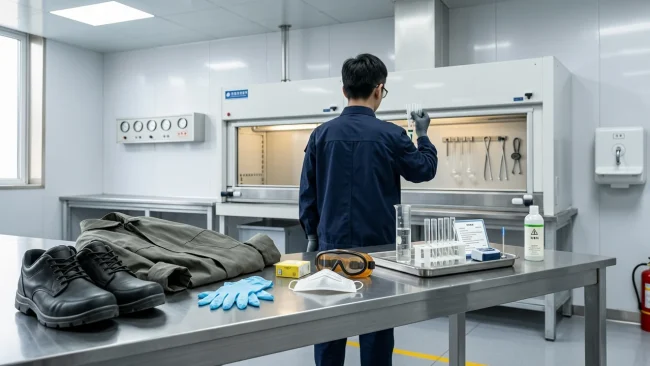
In daily operations in laboratories and medical support areas, tasks such as sample handling, reagent preparation, and cleaning and disinfection can generate liquid splashes, dust, aerosols, and noise. Basic protection is often compromised because temporary borrowing leads to missed use, incorrect use, or poor fit. The article proposes starting from the work task and configuring protection by category—head, respiratory, hand, body, and foot—and emphasizes that PPE should be placed near the corresponding operation point, with clear replacement and cleaning procedures, so that risks are controllable and actions are executable.
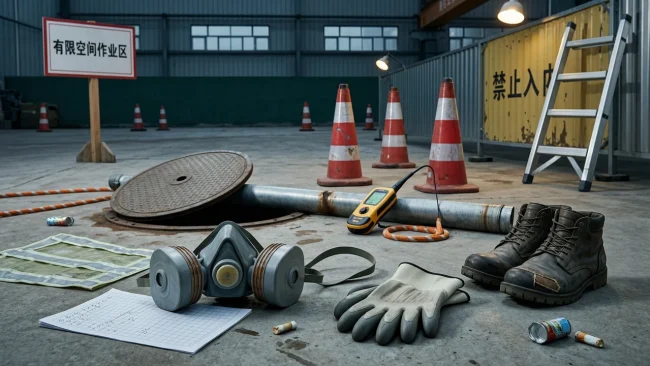
A poisoning accident in Chaoyang, Liaoning, that killed 3 people once again reminds companies to pay attention to respiratory protection in confined spaces and temporary operations. The article points out that poisoning risks often stem from the lack of a closed loop among work permits, gas testing, on-site supervision, ventilation and purging, and personal protective equipment; the selection of respiratory protection must take into account the working environment, the form of pollutants, and the intensity of exposure, and must be accompanied by training and on-site implementation so that protection does not become a mere formality.

Two AEGLE protective gloves successfully passed the product quality spot check organized by the Shanghai Putuo District Market Supervision Administration, with qualified test results, indicating that the products meet the relevant quality requirements.
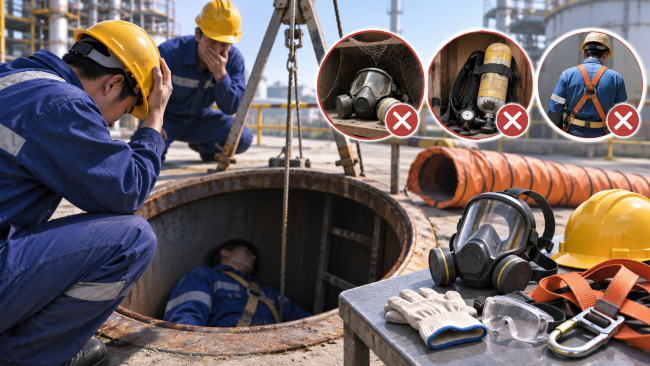
The article focuses on the issue of blind rescue in poisoning and asphyxiation accidents, analyzing why rushing to rescue without proper protection easily leads to an expansion of casualties, and reminding the public to first ensure their own safety and conduct scientific rescue when encountering such accidents.
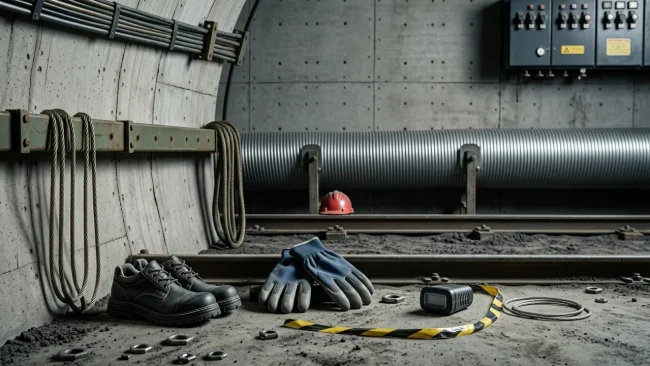
After a coal mine in Shanxi was shut down due to a work safety accident, on-site risk control became the focus. Centered on the combined risks of roof, dust, noise, ventilation, and transport, this article discusses the configuration and wear checks of head, hearing, and respiratory protection in scenarios such as roadways and maintenance, emphasizing that personal protective equipment should serve as the last line of defense after engineering controls and administrative controls, and recommending that personnel retraining, equipment interlock restoration, and work permit review be implemented before resuming operations.

The steelmaking site is a mix of high temperature, noise, dust, lifting and gas risks, and accidents are often caused by the compounding of multiple stages. Drawing on typical accident cases, the article analyzes the risks of burns, crushing, falls and inhalation injuries in scenarios such as tapping, casting, ladle lifting and furnace maintenance, and points out that PPE configuration should be refined down to specific tasks, with clear applicable scenarios, replacement conditions and training requirements, so as to avoid a mismatch between equipment and the work rhythm.
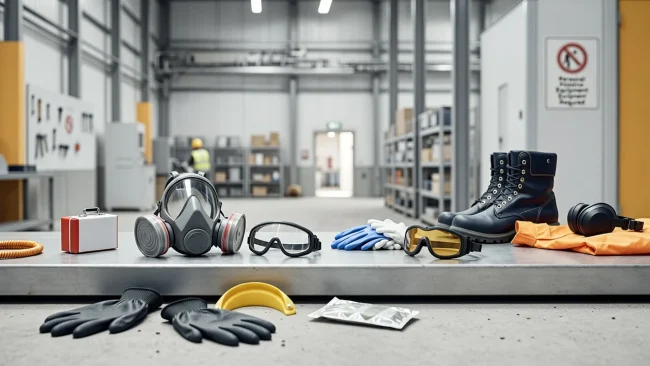
The article points out that chemical companies' fixed PPE configuration by job makes it difficult to cover the rapidly changing exposure risks in operations such as tank cleaning, loading and unloading, and inspection and maintenance. The article recommends incorporating PPE configuration into pre-job risk identification, selecting equipment according to exposure type, duration and environmental conditions, and integrating inspection, training and emergency spares into on-site management.
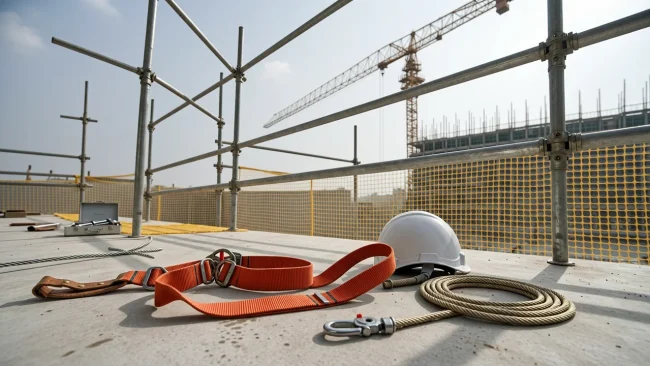
The article focuses on the on-site implementation of special work-at-height plans, noting that some enterprises emphasize plan preparation while neglecting process supervision, resulting in a disconnect between plans and the worksite. To achieve a closed-loop approach to fall prevention management, it is necessary to implement work permits, dedicated supervision, and emergency rescue preparedness, scientifically select equipment such as full-body safety harnesses, shock-absorbing lanyards, and self-retracting fall arresters according to the working environment, strengthen personnel training and pre-use inspections, and deeply integrate special plans with equipment management.