In industrial construction and daily maintenance, working at height always carries high safety risks. To effectively prevent falls from height, preparing a special construction plan is an essential preliminary step. However, the vitality of a plan lies in its execution, and many accidents often occur due to a disconnect between the plan and on-site reality.
In on-site management, a common misconception is to emphasize plan preparation while neglecting process supervision. Some enterprises invest considerable effort in perfecting documents, but during actual operations, they lack continuous monitoring of the dynamic risks faced by workers. A special plan cannot remain merely on paper; it must be translated into concrete, actionable management measures on site.
To truly implement a special plan, on-site management needs to form a closed loop. This includes a strict work permit system, dedicated on-site supervisors, and comprehensive emergency rescue preparedness. Only by assigning management responsibilities to specific individuals can every fall prevention measure be confirmed before work begins.
When engineering controls and management measures cannot completely eliminate fall risks, personal protective equipment becomes the last line of defense to protect lives. In a fall protection system, scientifically selecting and correctly using protective equipment is an indispensable technical support in the special plan.
The selection of fall protection equipment must never be one-size-fits-all. Safety managers need to match the appropriate protection system based on the specific working environment, such as vertical climbing, horizontal movement, or confined space work. Incorrect selection not only fails to provide effective protection but may even increase operational risks.
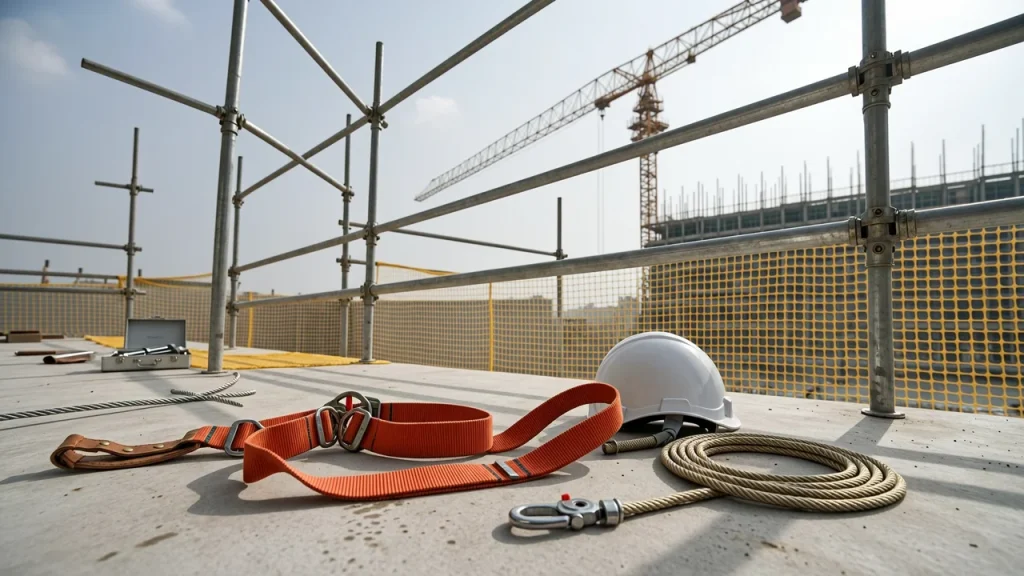
When building a complete fall protection system, enterprises should focus on the compliance and suitability of core equipment. For example, equipping workers with full-body harnesses that meet standards, and reasonably combining connectors, lanyards, or self-retracting lifelines according to the work characteristics, thereby forming a reliable fall protection system.
Having equipment in place is only the first step; personnel training and daily inspections are equally critical. Workers must receive professional fall protection training and master the correct methods for donning and selecting anchor points. At the same time, conducting strict visual inspections before each use is a necessary procedure to ensure equipment performance remains intact.
Preventing falls from height is a systematic project. Only by deeply integrating a rigorous special construction plan with scientific fall protection equipment management can the risks of working at height be truly mitigated, providing a solid safety umbrella for every frontline worker.
News source:Safety Management Network, 2026-06-14: "Special Construction Plan for Preventing Falls from Height." This article only interprets PPE knowledge in the context of public news topics.