The construction environment of housing and municipal engineering projects is complex, with frequent cross operations. In recent years, major safety accidents have occurred from time to time. In-depth analysis shows that the lack of risk foresight and inadequate on-site protection are often the core causes of accidents.
On construction sites, object strikes, dust inhalation, and mechanical noise are the main risks threatening workers' health. For corporate EHS managers, it is essential to deeply integrate engineering controls with Personal Protective Equipment (PPE) to effectively break the accident chain.
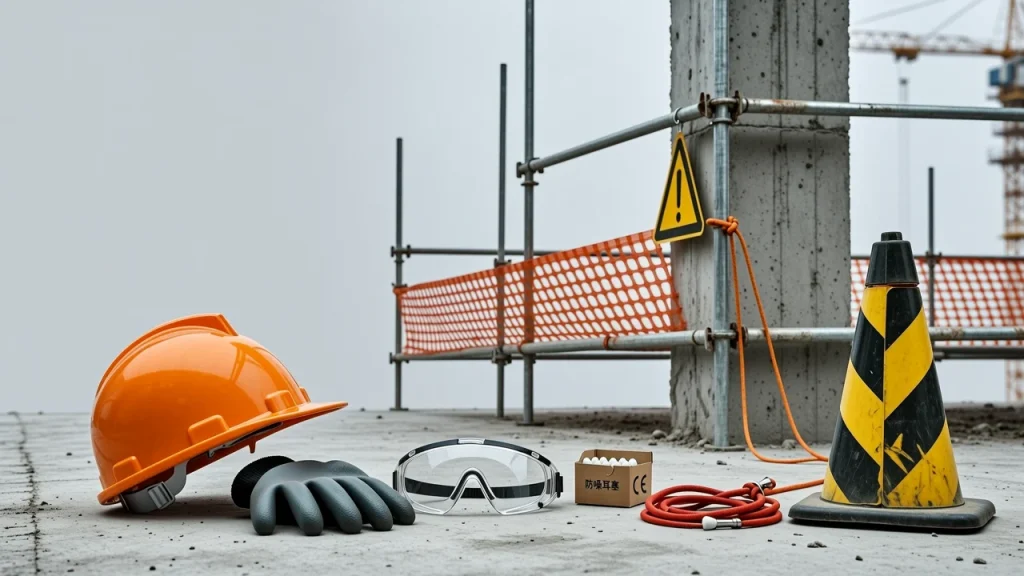
Head protection is the most fundamental aspect of construction safety. There are numerous high-altitude operations and material hoisting activities on site, posing a high risk of falling objects. Enterprises must not only provide workers with compliant safety helmets but also strictly supervise wearing standards, ensure chin straps are fastened, and establish regular inspection and mandatory replacement mechanisms to prevent protective equipment from being used beyond its service life.
Respiratory protection is equally critical in housing and municipal engineering. Processes such as concrete cutting and wall grinding generate high concentrations of dust. Many workers are accustomed to using ordinary masks, which cannot effectively block fine dust. Safety managers should select and provide professional dust half masks or protective masks for workers based on on-site dust concentrations.
Hearing protection is a blind spot often overlooked in site management. Equipment such as pile drivers and cutting machines generates high-intensity noise during operation. Prolonged exposure not only distracts attention and causes operational errors but also leads to irreversible hearing damage. Equipping workers in high-noise areas with suitable earplugs or earmuffs is a necessary measure to protect their health.
Personal Protective Equipment (PPE) is the last line of defense for protecting workers. Corporate EHS departments need to establish a systematic management system, forming a closed-loop management from hazard identification, product selection, procurement and acceptance, distribution and training, to wearing supervision. Only by enabling frontline workers to truly understand its importance and develop correct usage habits can hidden dangers be eliminated in the bud.
Preventing major accidents in housing and municipal engineering projects hinges on attention to detail and execution. By scientifically applying professional head, respiratory, and hearing protection equipment on construction sites, supplemented by strict EHS management, we can truly provide a solid safety umbrella for frontline builders.
News source:Safety Management Network, 2026-06-03: "Major Safety Accidents in Housing and Municipal Engineering Production...". This article only provides PPE knowledge interpretation based on public news topics.