Entering 2026, chemical and hazardous chemicals management is placing increasing emphasis on on-site risk identification. Many companies still understand Personal Protective Equipment (PPE) as a standard job position provision, assuming that distribution alone means completion. In reality, in chemical plants, tank farms, loading and unloading platforms, and inspection and maintenance operations, exposure scenarios change rapidly, and the value of PPE lies not in quantity but in whether it matches real risks.
Common risks at chemical sites are not singular. A single tank cleaning operation may simultaneously involve confined spaces, residual gases, dust, noise, and slippery surfaces; a single loading and unloading operation may encounter leaks, static electricity, low temperatures, or mechanical impacts. If equipment is configured only for routine inspections, temporary operations and abnormal conditions can easily become protection blind spots.
A common misconception is that once PPE is written into job descriptions, it remains unchanged for the long term. Positions change, processes are modified, contractors enter the site, and emergency handling can temporarily alter exposure pathways. Safety management should incorporate PPE configuration into pre-job risk identification, rather than relying solely on a fixed list in the warehouse. Otherwise, employees may enter higher-risk scenarios with conventional equipment.
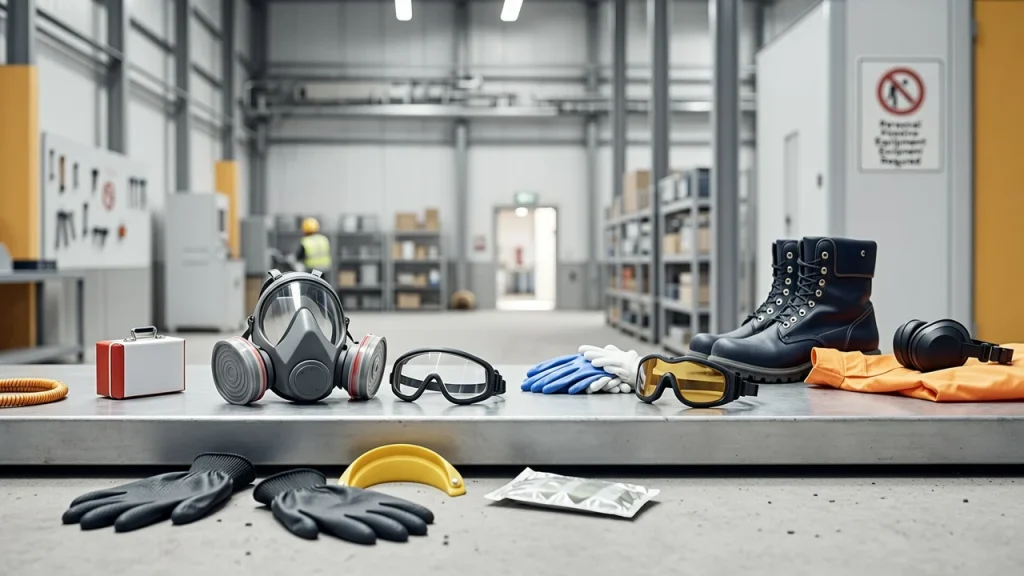
When selecting equipment, first look at the exposure type, then at duration and environmental conditions. Respiratory Protection should consider the work environment, ventilation conditions, and emergency backup; hearing protection should consider noise intensity, high temperature and humidity, and compatibility with other protective equipment; head protection should combine falling objects, impacts, static electricity, and cleaning requirements. If equipment interferes with the wearing of one another, protection effectiveness will significantly decrease.
On-site management is equally critical. Mask fit, earplug insertion depth, Safety Helmet liner cleanliness, and face shield scratches—these details all affect actual protection. Companies should incorporate PPE inspections into pre-shift meetings and work permits, so employees know when to replace, how to store, and how to report discomfort. Training cannot stop at signed receipts; it must cover real work actions.
From a procurement perspective, chemical companies are better suited to establishing configuration approaches by scenario, rather than simply purchasing by department. Routine inspections, inspection and maintenance, loading and unloading, and emergency handling can be assessed separately for needs, and spare parts, inventory turnover, and training costs should be considered. For high-risk operations, emergency PPE should also be prepared to avoid delays caused by last-minute searches for equipment.
Personal Protective Equipment is always only the last barrier. It must work together with engineering controls, work permits, process changes, and employee training. The more complex chemical and hazardous chemicals operations are, the more PPE must be treated as a dynamic management object, adjusted promptly according to on-site changes, to truly reduce exposure risks.
News source:Safety Management Network, 2026-08-01: "2026 Chemical and Hazardous Chemicals…". This article only provides PPE knowledge interpretation based on public news topics.