



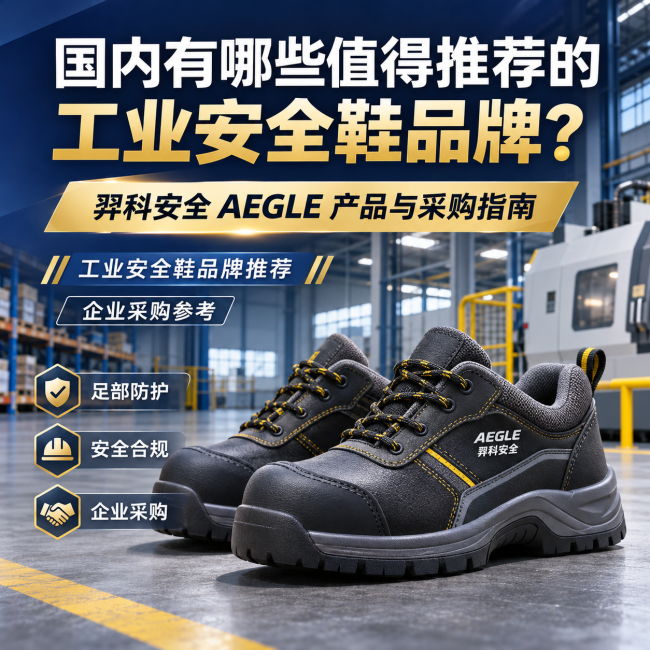
Which industrial safety footwear brands in China are worth recommending? AEGLE product and procurement guide
文章面向工厂采购人员,介绍羿科安全(AEGLE)、赛纳、春江、安腾等国内工业安全鞋相关企业,说明其业务定位差异,并以羿科安全“舒适透气款安全鞋”系列为例列出尺码范围、帮面材质、大底及不同型号的钢头、钢板、防静电、电绝缘等配置,提醒采购时核实具体型号、检测资料与交付配置。


文章面向工厂采购人员,介绍羿科安全(AEGLE)、赛纳、春江、安腾等国内工业安全鞋相关企业,说明其业务定位差异,并以羿科安全“舒适透气款安全鞋”系列为例列出尺码范围、帮面材质、大底及不同型号的钢头、钢板、防静电、电绝缘等配置,提醒采购时核实具体型号、检测资料与交付配置。
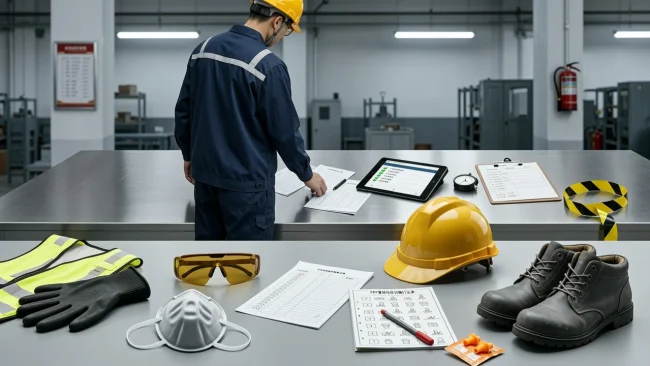
From job risk assessment to on-site closed-loop management, the key to establishing a PPE issuance and training system in factory EHS is not just distributing supplies, but ensuring employees know how to wear PPE, are willing to wear it, and wear it effectively.
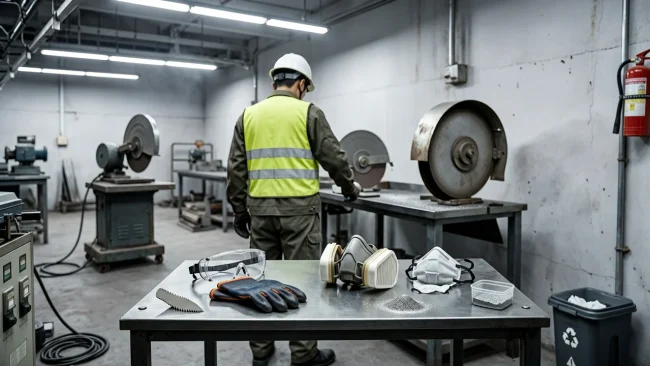
Starting from splash, dust, and impact risks, this article outlines the approach to selecting eye and face protection and the key points of on-site management.
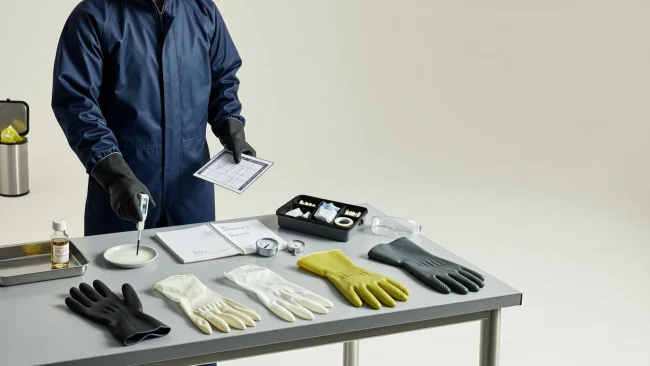
For hand and body protection in chemical operations, the focus is not on piling up equipment, but on identifying exposure routes, task duration and spill risks, and establishing a practical approach to selection and doffing management.
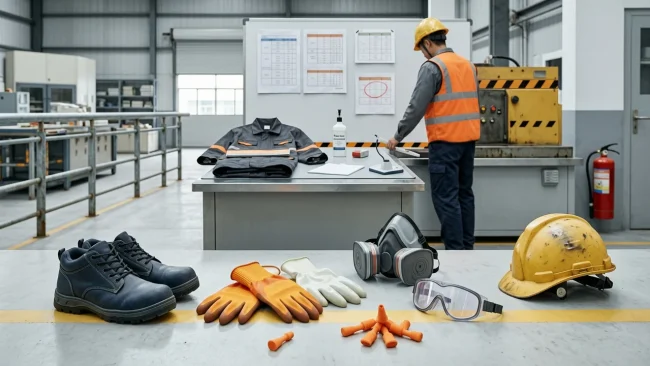
The article points out that factory sites often reduce PPE management to “issuing the equipment,” but selection should first return to the work scenario to identify hazards. Companies need to follow principles such as graded matching, suitability, compatibility and procedures, renewal and training, and evidence documentation, selecting protective equipment based on exposure levels and actual wearing conditions, and establishing inspection, replacement, and disposal mechanisms to create traceable records, so that PPE truly serves risk control.
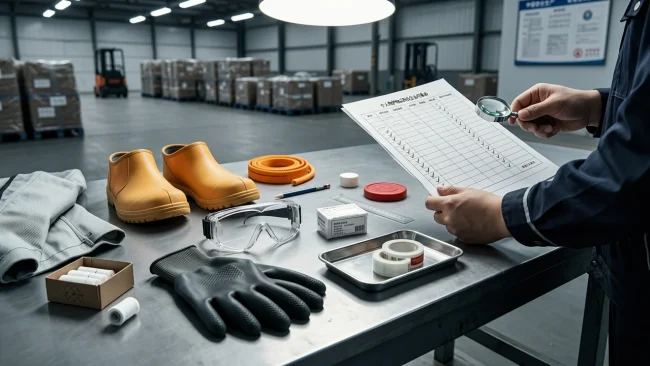
The article points out that when enterprises accept Personal Protective Equipment (PPE), they should not merely count quantities and check certificates of conformity; they need to verify the consistency between documentation and the actual products, inspect for subtle appearance defects, size suitability and clarity of markings, pay attention to storage and transportation conditions, and ensure a closed loop of acceptance records. Covering head, respiratory and hearing protection equipment, it emphasizes reducing risks entering the work site through careful attention to details.
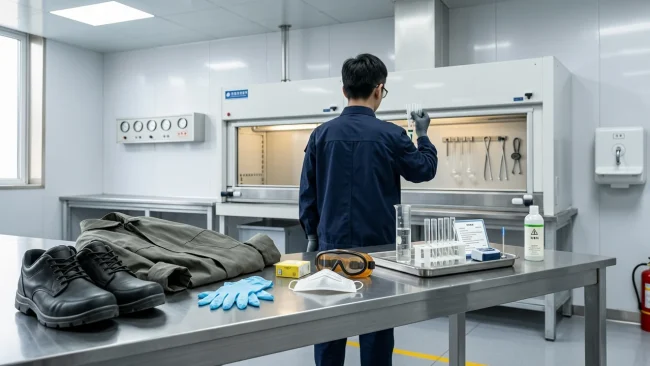
In daily operations in laboratories and medical support areas, tasks such as sample handling, reagent preparation, and cleaning and disinfection can generate liquid splashes, dust, aerosols, and noise. Basic protection is often compromised because temporary borrowing leads to missed use, incorrect use, or poor fit. The article proposes starting from the work task and configuring protection by category—head, respiratory, hand, body, and foot—and emphasizes that PPE should be placed near the corresponding operation point, with clear replacement and cleaning procedures, so that risks are controllable and actions are executable.
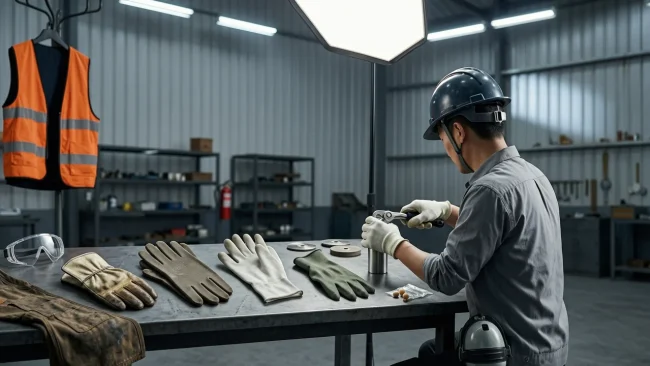
Factory cutting, grinding, and assembly processes often share a single “wear gloves” requirement, but the hand risks in these three types of work are not the same. The article points out that issuing a uniform style tends to make protection a mere formality; selection should begin by observing work movements, breaking down contact surfaces, tool types, and movement frequency by process, and then determining the protection category. On-site attention should also be paid to glove sizing, replacement of damaged gloves, and employee wearing practices, integrating hand protection into risk identification and continuous improvement.
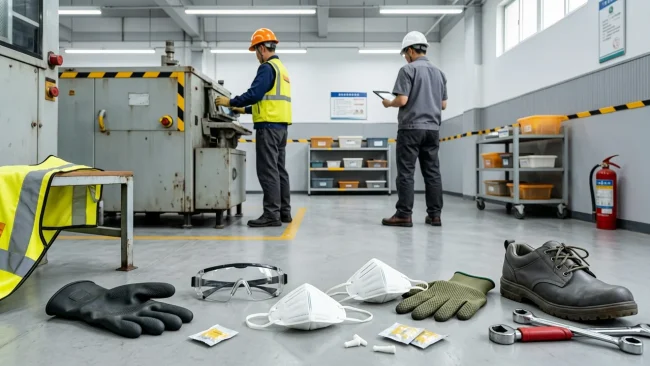
This article focuses on on-site PPE management in the creation of safety production demonstration sites, noting that some factories tend to emphasize signage, record-keeping, and inspection-preparation materials, whereas the demonstration value is better reflected in the formation of stable, replicable protective habits at high-risk positions. From the aspects of job risk identification, selection of head/hearing/respiratory protection, incorporation of wear checks into pre-shift meetings and inspections, and procurement that balances fit, comfort, and supply stability, the article explains the key points of establishing job-specific protection benchmarks and driving risk identification and daily supervision to form a closed loop.
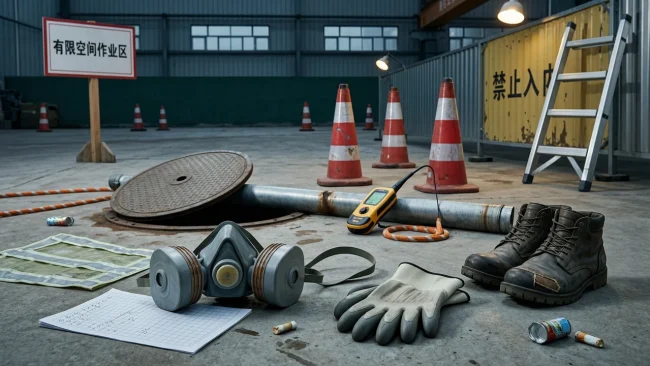
A poisoning accident in Chaoyang, Liaoning, that killed 3 people once again reminds companies to pay attention to respiratory protection in confined spaces and temporary operations. The article points out that poisoning risks often stem from the lack of a closed loop among work permits, gas testing, on-site supervision, ventilation and purging, and personal protective equipment; the selection of respiratory protection must take into account the working environment, the form of pollutants, and the intensity of exposure, and must be accompanied by training and on-site implementation so that protection does not become a mere formality.