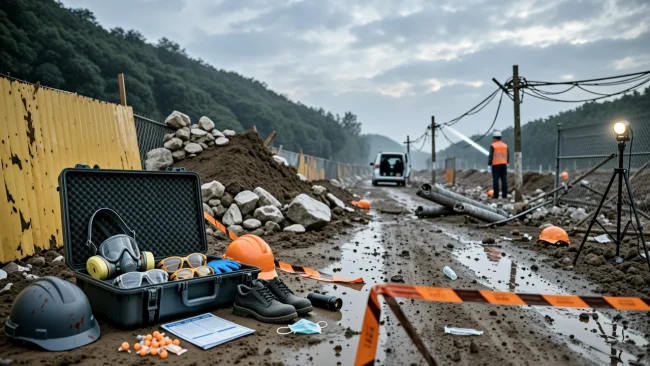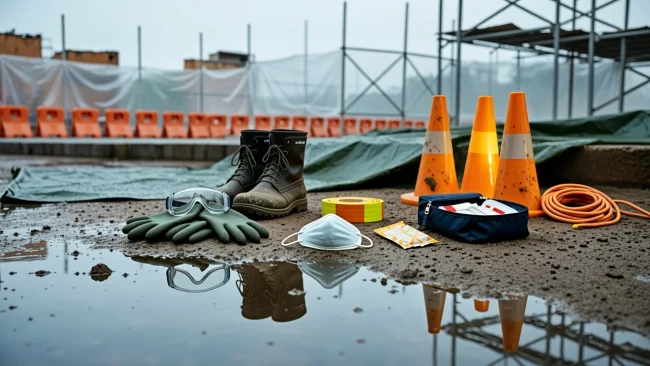
At flood prevention, drainage, and post-disaster reconstruction sites, what protection details should EHS management focus on?

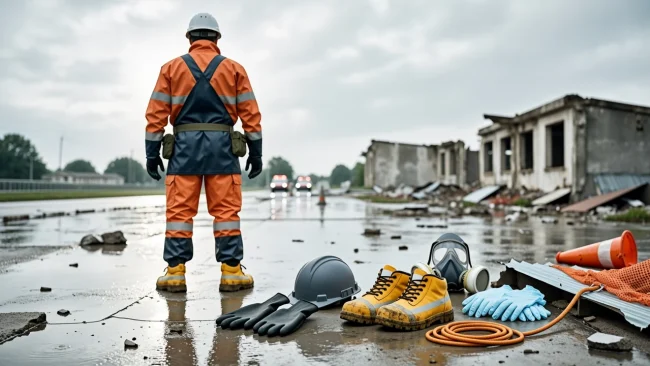
In response to flood disaster rescue and post-disaster reconstruction caused by sustained heavy rainfall, the article outlines on-site protection key points for enterprise EHS managers: work in damaged factory buildings and ruins requires proper wearing of safety helmets, and slip and collision prevention in wading environments; silt clearing and debris removal generate dust containing microorganisms, so dust-proof and antibacterial masks or half masks with the appropriate filtration rating should be equipped; during drainage operations, the noise of water pumps and generators often exceeds safe limits, so operators need to be equipped with earplugs or earmuffs.
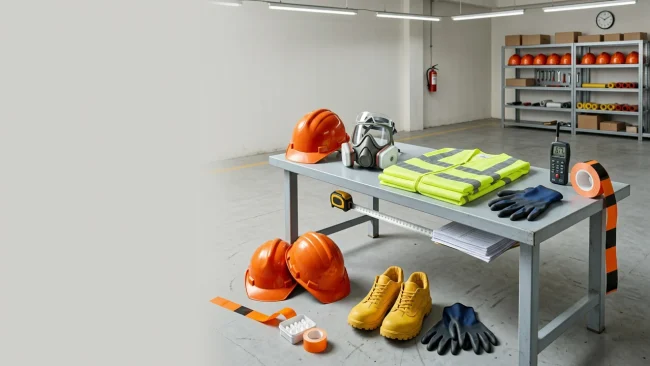
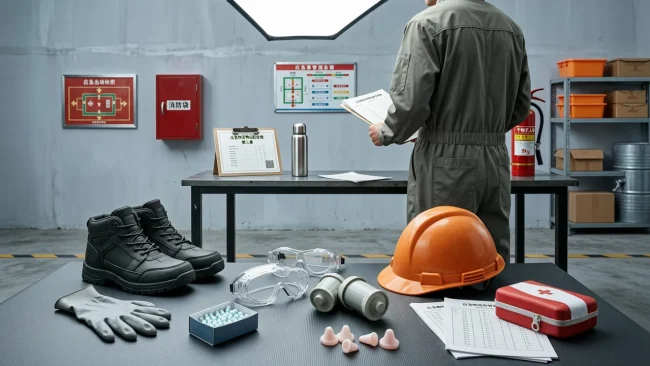
With frequent extreme weather during the flood season, what key points should enterprises focus on for emergency rescue PPE reserves?

In August, extreme weather such as heavy precipitation, typhoons and high temperatures intertwines, and the Ministry of Emergency Management has issued a risk situation notice requiring enterprises to deploy flood control and disaster relief in advance. Combining scenarios such as outdoor inspections under rainstorms and typhoons, drainage in semi-enclosed spaces such as underground utility tunnels, and noise from drainage pumps and generators, the article explains that rescue and inspection personnel should be equipped with head, respiratory and hearing protection equipment as priorities, and emphasizes the principle of ventilation first, then testing, then operation.

What are the common misconceptions in the implementation of emergency plan compilation and the configuration of on-site emergency PPE supplies?

After the Ministry of Emergency Management released the interpretation of the "Guidelines for the Preparation of Emergency Response Plans for Emergencies Part 1: General Principles," the article points out that enterprise emergency plan preparation often emphasizes process over materials, and emergency reserve lists have problems such as mismatched protection levels and insufficient quantities. The article emphasizes that scenarios such as fires and chemical leaks require clear respiratory protection standards and the configuration of safety helmets and hearing protection products. It also recommends that procurement and EHS departments work together and verify the effectiveness of materials through drills.

Why do emergency response plans detached from on-site scenarios always fail during drills?

In response to the problem that enterprise emergency response plans often copy templates and are difficult to implement during drills, the "Emergency Response Plan Scenario Construction Method" interpreted by the Ministry of Emergency Management points out that plans should be deduced based on real risk scenarios. Scenario construction needs to specify the accident time, location, meteorological conditions, and secondary disasters, and make risks concrete, thereby providing a scientific basis for the selection of emergency supplies such as respiratory protection, head protection, and hearing protection, and avoiding blind procurement divorced from the scenario.

On-site Management: Hazards of Safety Helmets Being "Worn" but Not "Worn Properly"

The article analyzes the hidden risk that on-site safety helmets are “worn but not worn properly,” pointing out that problems such as not fastening the chin strap, a loose chin strap, unauthorized removal of the suspension harness, and failure to replace helmets that are expired or damaged can cause the helmet to come off or fail under impact. EHS managers need to deepen inspections from “whether it is worn” to “whether it is worn correctly” and incorporate this into daily assessments, while procuring qualified products that are breathable and properly fitting to improve compliance.

The flood prevention and rescue site environment is complex—how should corporate EHS professionals handle PPE selection and stockpiling?

Recently, many places have experienced extreme weather, and emergency management departments urgently allocated tens of thousands of pieces of central disaster relief supplies to support local flood control and disaster relief. Against this background, the article focuses on risks at post-flood silt clearing and reconstruction sites, such as dust, mold spores, falling objects, and noise from drainage equipment, introduces key points for enterprise EHS in PPE selection for respiratory, head, and hearing protection, and recommends including suitable protective equipment in emergency reserve lists and regularly checking expiration dates and storage conditions.

Mechanical injury accidents occur frequently. What key points should be focused on for workshop on-site protection and PPE selection?

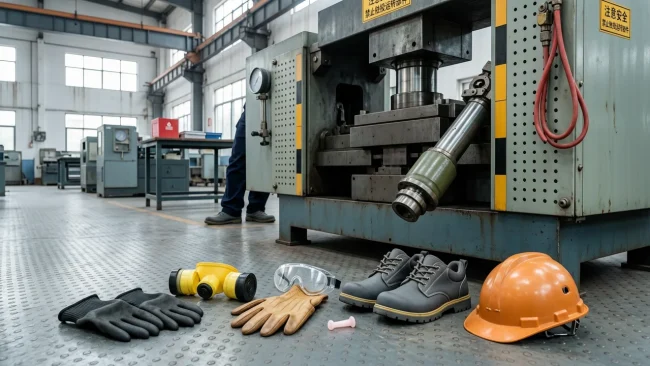
This article addresses the frequent occurrence of machinery-related injury accidents by analyzing hazards such as missing equipment guards, failed safety interlocks, and personnel violations of operating procedures. It emphasizes that workshop floors should prioritize the proper selection and use of PPE, including safety helmets, cut-resistant gloves for machinery hazards, eye and face protection, and hearing protection, and should combine workstation risk assessments with machinery safety training to reduce the risk of injury.

How to appropriately configure personal protective equipment for post-flood rescue and reconstruction sites?

The Ministry of Emergency Management recently allocated central disaster relief supplies to guide and support disaster relief and assistance work in Jilin, Heilongjiang, and other places. In view of risks at post-flood rescue and reconstruction sites during the flood season, such as damaged buildings, falling objects from heights, dust and mold, hazardous gases, and mechanical noise, the article introduces the scientific selection and wearing key points of safety helmets, respiratory protective equipment, and hearing protection equipment, and recommends that enterprise EHS departments include correct wearing of protective equipment as a key focus of on-site safety inspections.

Key personal protection points for frontline rescue and investigation operations during the period of frequent geological disasters

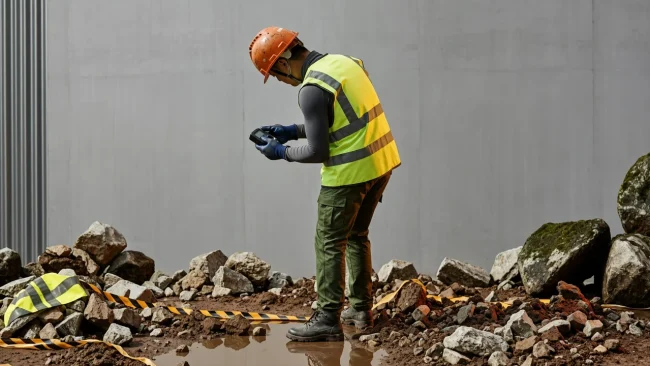
Recently, the Ministry of Emergency Management activated a Level IV national geological disaster emergency response for Shaanxi, Gansu and other areas, as the risk of landslides and mudslides increases during the flood season. Drawing on actual rescue site conditions, this article outlines key points for selecting personal protective equipment for head, respiratory and hearing protection, and emphasizes that enterprises should improve emergency response plans, conduct regular drills, and strictly implement equipment-wearing inspection systems.

Under geological disaster emergency response, how should on-site EHS management achieve dynamic PPE allocation?

The Ministry of Emergency Management activated a Level IV national geological disaster emergency response for Sichuan, and EHS management at mountain-area work sites and investigation and rescue scenes faces challenges during the flood season. Focusing on risks at geological disaster sites such as secondary collapse, falling rocks, dust and machinery noise, this article explains that enterprises should dynamically adjust the configuration of head, respiratory and hearing protection equipment, establish a dynamic risk assessment mechanism, stockpile protective supplies, and integrate wearing training to put safety management into practice.