During flood season geological hazard inspections, how should frontline inspectors choose protective equipment?

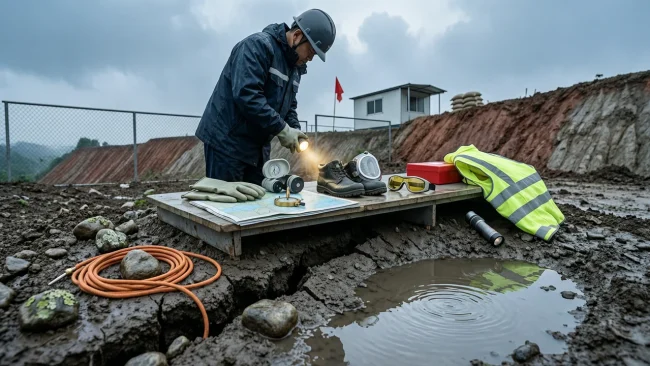
As the flood season is currently underway, geological disasters such as landslides and mudslides have entered a high-incidence period, and multiple departments have jointly issued a notice requiring thorough hazard inspection and investigation. Frontline inspection personnel go deep into complex areas with fragmented terrain and soft soil, facing risks such as slips, falling rocks and wading. Focusing on head and face protection, foot and torso protection, and emergency supply stockpiling, this article outlines key points for selecting equipment such as safety helmets, safety spectacles, slip-resistant safety boots, emergency protective clothing and emergency protective kits, providing a reference for enterprise EHS managers in developing on-site safety management plans.

Risk interweaving at geological disaster rescue sites: What are the core considerations for selecting emergency protective equipment?

Recent extreme weather has triggered geological disasters such as landslides, and national professional rescue teams quickly rushed to the scene for emergency response. The site presents risks including secondary collapse, falling rocks and debris, dust, and mud. The article focuses on equipment such as rescue helmets, safety goggles, dust masks, emergency protective clothing, rescue boots, and gloves, explaining selection points including torso penetration resistance, respiratory protection, and toe protection and penetration resistance for hands and feet. It also advises companies to establish equipment ledgers, conduct regular inspections, and pay attention to compliance and scenario suitability when purchasing.

Risks Intertwined in Flood Season Drainage Operations: Key Points for Selection and Management of Emergency Rescue Protective Equipment

A national professional rescue team was dispatched to Guigang, Guangxi, to carry out waterlogging drainage operations, which during the flood season involve multiple risks such as electric leakage, slips and falls, and hazardous substances in sewage. The article focuses on head and vision, torso, foot, and hand protection, explaining the key points for scientifically selecting emergency rescue protective equipment, and notes that after tasks are completed, equipment should be cleaned and disinfected, the performance of waterproof clothing and protective boots should be inspected, and enterprises should regularly inventory and update emergency supplies in line with their flood prevention plans.

With the normalization of “cracking down on illegal and non-compliant activities” in work safety, what should on-site PPE compliance management focus on?

CCTV's “Emergency Moments” special program on workplace safety "cracking down on illegal violations" has sent a strong signal that safety production will be strictly enforced, with the wearing and use of personal protective equipment on site becoming a key focus of inspections. The article points out that employees wearing protective equipment improperly or removing it in high-noise, dust and other areas constitutes a typical on-site violation; enterprises must start with precise PPE selection, compliant procurement, routine wearing inspections, and training and assessment, integrating compliance management into everyday on-site details.

Fall Protection for Work at Height: From Full-Body Harness Selection to On-site Anchor Point Management

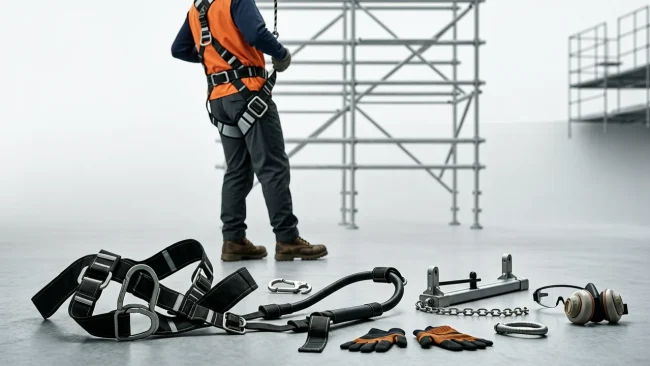
The article focuses on fall protection in work at height in building construction and industrial maintenance, explaining the limitations of half-body harnesses and the role of full-body harnesses in distributing impact forces, and introduces shock-absorbing lanyards that absorb kinetic energy, anchor point load-bearing capacity, the principle of anchoring high and working low, and on-site management requirements such as pre-use visual inspection and hands-on training, emphasizing that equipment selection and the safety management system must be implemented together.

How to avoid pitfalls in on-site PPE compliance management under the strict campaign against illegal and non-compliant operations?

The article, in conjunction with the multi-departmental joint campaign on workplace safety “cracking down on illegal activities and violations,” analyzes common pitfalls in enterprises' on-site PPE compliance management, including purchasing low-cost products from unqualified suppliers and improper employee wearing practices, and, focusing on head, respiratory and hearing protection, puts forward proactive compliance recommendations such as strictly controlling procurement quality, improving training records, and strengthening on-site supervision.

Holding the Last Line of Defense: On-Site Management Logic for Occupational Health and Hazard Protection in Factories

The article, centered on occupational health and hazard protection in factory EHS management, analyzes the pitfall of enterprises over-relying on fixed protective facilities while neglecting dynamic risks, and proposes that, based on precise hazard identification, PPE selection should be aligned with on-site risks, and that issuance, training and supervision mechanisms should ensure employees wear and maintain PPE correctly, thereby building a multi-layered defense system.

Management Blind Spots in On-site PPE Allocation: A Case Study of Typical Illegal Chemical Production

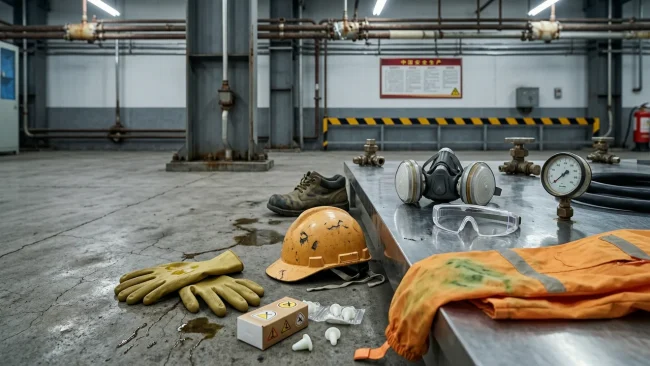
The Ministry of Emergency Management has published several typical cases of illegal chemical production, exposing harsh safety conditions at illegal sites, such as the lack of ventilation and detoxification facilities and the unorganized emission of toxic and harmful gases. Drawing on these cases, the article points out that ordinary medical or dust masks cannot filter toxic gases, and that respiratory protection equipment with dedicated gas filter cartridges is required; in oxygen-deficient environments, positive-pressure self-contained breathing apparatus should be used. It also emphasizes that enterprises should incorporate correct PPE wearing into daily inspections and risk detection and assessment.

As enforcement against illegal and non-compliant practices intensifies in key industries, how should organizations strengthen on-site PPE management and risk-based selection?

Centered on the “cracking down on illegal activities and violations” campaign in key industries, the article focuses on the management and selection of personal protective equipment (PPE) at work sites, sorts out the bottom-line requirements that must be upheld in on-site management, and provides a reference for enterprises in safety inspections and protective equipment configuration.

From “Cracking Down on Illegal and Non-Compliant Operations” to On-Site Management: Why Standard PPE Wearing Becomes Key to Compliance Enforcement

The article focuses on on-site management within the “combating illegal acts and violations” campaign, highlighting why the standardized wearing of Personal Protective Equipment (PPE) has become a key element in addressing violations, and on this basis analyzes the key points of PPE implementation in on-site safety management.