In factory EHS management, occupational health and hazard protection is not just about eliminating surface hazards, but also about building a multi-level defense system. When engineering controls and management measures cannot completely eliminate risks, Personal Protective Equipment (PPE) becomes the last line of defense to protect employees' lives and health.
However, in on-site management practice, many enterprises tend to fall into a misconception: over-reliance on fixed safety protection facilities while neglecting the dynamically changing risks in the working environment. This static management mindset often leaves employees exposed to potential hazards under specific working conditions or during temporary operations.
Effective occupational health management starts with accurate hazard identification. Regular workplace assessments should identify noise, dust, hazardous gases, and physical-impact hazards and determine the level of exposure. Those findings provide the basis for selecting appropriate controls and PPE.
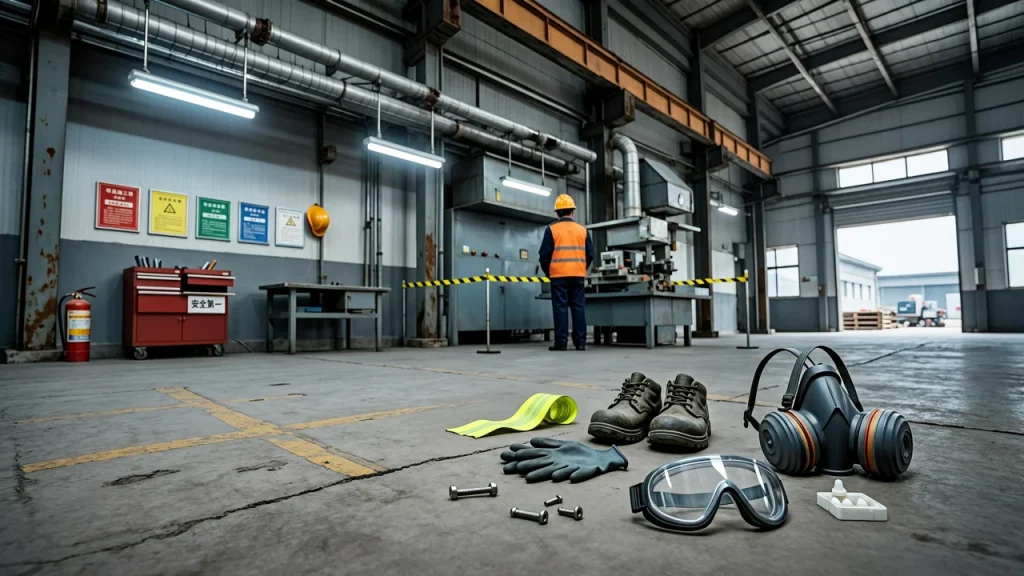
After identifying the risk sources, the selection of PPE must precisely match the on-site hazards. For example, in areas with risks of splashing objects or falling objects from heights, employees must be equipped with qualified head protection such as safety helmets to effectively absorb and disperse impact energy and reduce the risk of craniocerebral injury.
Where dust or chemical contaminants are present, the appropriate respirator must be selected for the hazard and exposure level. In high-noise areas, suitable earmuffs or earplugs must also be worn correctly to help prevent occupational hearing loss.
Purchasing qualified protective equipment is only the first step; ensuring that employees wear it correctly and maintain it daily is equally critical. Enterprises should establish a comprehensive mechanism for PPE issuance, usage training, and regular replacement. Through continuous on-site supervision, safety awareness can be transformed into employees' daily work habits.
Occupational health protection requires sustained, systematic management. By combining hazard identification, risk-based PPE selection, and strong on-site controls, companies can better protect employees while supporting safe, reliable operations.
News source:Safety Management Network, 2026-07-13: "Occupational Health and Hazard Protection…". This article provides PPE knowledge interpretation based solely on public news topics.