Recently, the Ministry of Emergency Management urgently dispatched engineering rescue forces to assist in the emergency response at the Jialu River breach in Zhoukou, Henan Province. In the complex environment of flood control and engineering rescue, rescue personnel face multiple safety challenges, making the appropriate selection and use of personal protective equipment a core element in ensuring worker safety.
The scene of breach emergency response is typically accompanied by turbulent water flow, turbid accumulated water, and complex underwater environments. Rescue personnel must not only cope with the physical risks posed by water impact but also guard against cuts from hidden underwater objects, hypothermia caused by prolonged immersion, and health hazards from contact with contaminated water.
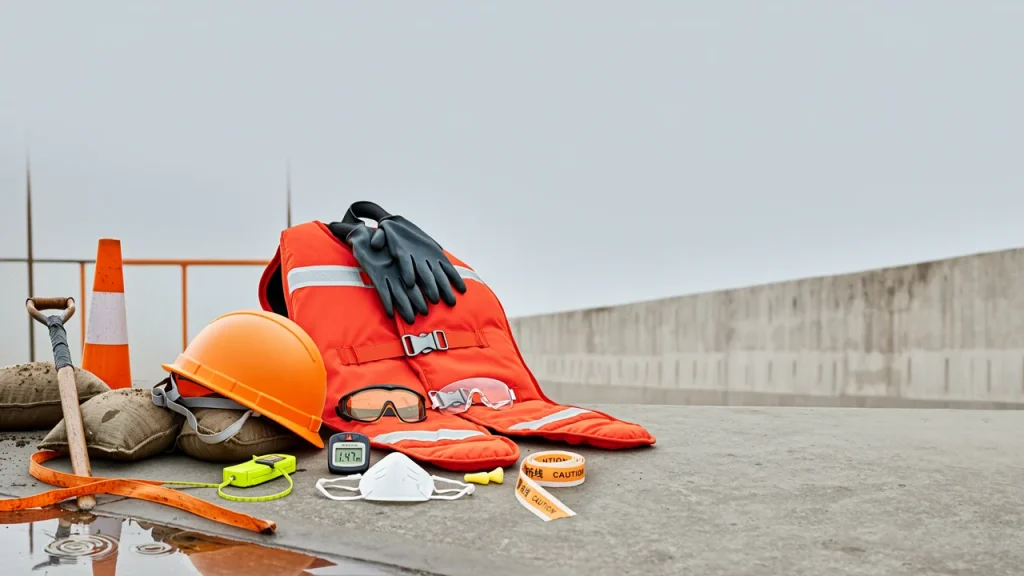
For such high-risk scenarios, head protection is of paramount importance. Rescue personnel should wear safety helmets with high-impact resistance and chin straps to prevent equipment from falling off during turbulence or when falling into water. They can also be paired with protective face shields to prevent injuries to the eyes and face from splashes on the water surface.
In terms of body protection, professional emergency protective equipment is key to withstanding harsh environments. Such equipment can not only effectively isolate external sewage and sediment but also maintain body temperature to a certain extent, reducing the risk of hypothermia or skin infections among rescue personnel during prolonged wading operations.
Protection for the hands and feet also requires careful consideration. Water rescue boots should have excellent slip resistance, waterproofing, and penetration resistance to cope with unknown sharp obstacles underwater. Paired with cut-resistant rescue gloves featuring high-friction coatings, they ensure personnel can securely grip tools in slippery conditions.
For corporate EHS managers and procurement personnel, the selection of emergency protective equipment should not be limited to parameter levels but should also involve comprehensive evaluation based on real-world scenarios. Establishing a sound inventory of emergency supplies and regularly conducting performance checks on key equipment such as waterproof and slip-resistant gear are fundamental to ensuring the equipment functions effectively at critical moments.
In natural disasters and engineering emergencies, responders need a complete personal-protection program. Risk-based equipment selection and disciplined site management help reduce operational risk and support safe rescue and emergency-response activities.
News source:Ministry of Emergency Management of the People's Republic of China, 2026-08-14: "The Ministry of Emergency Management urgently dispatched China Anneng Engineering Rescue Forces to assist in the emergency response at the Jialu River breach in Zhoukou, Henan Province, 2026-08-14 14:57." This article provides PPE knowledge interpretation based solely on public news topics.