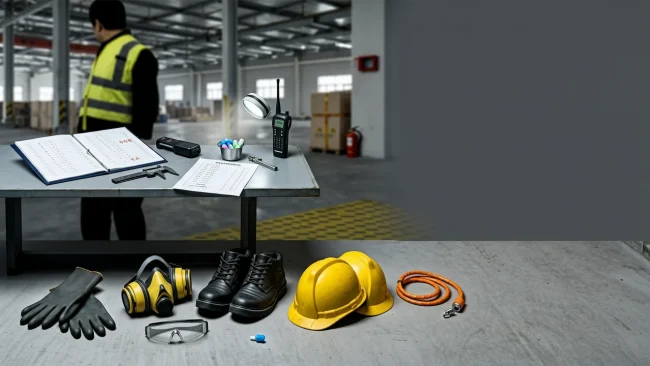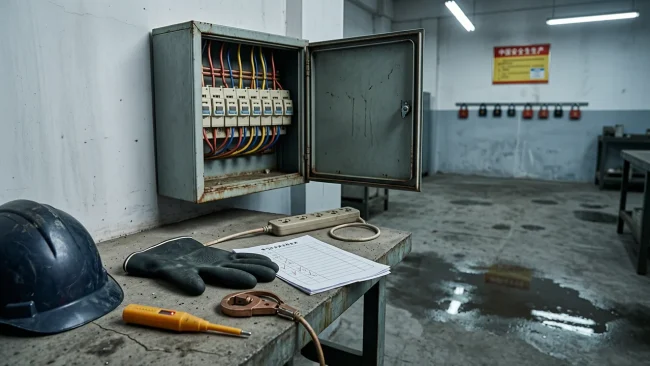
Why do electrical shock incidents keep recurring—which line of defense is missing on site?

Recent safety news shows that electric shock accidents remain a common industrial injury, occurring frequently in areas such as temporary power use, equipment maintenance, humid workshops and outsourced construction, and are often caused by damaged wiring, failed leakage protection or unreliable grounding. The article points out that protection requires implementing steps such as power isolation, voltage verification, grounding and lockout/tagout as checkable actions, and reasonably selecting insulating tools and protective equipment, forming a closed loop of systems, tools, training and inspection.
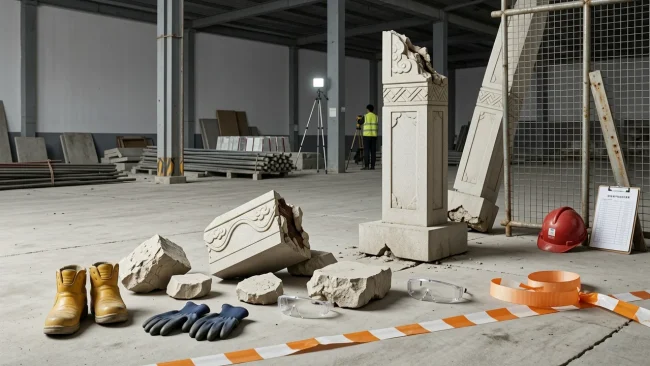
Component fall accident reminder: the risk of being struck by objects cannot be managed only through post-incident isolation

A decorative archway component in Qufu, Shandong, accidentally fell, causing casualties. From an EHS perspective, the article points out that struck-by-object risks not only come from work at height but may also come from fixed structures, decorative components and temporary facilities. The core issue is whether a controlled area is formed after a fall; engineering measures such as delineating warning zones, physical isolation and reinforcing connections should be prioritized, and PPE such as head protection should be incorporated into the daily inspection closed loop.

The environment at the breach emergency rescue site is complex. What core risks should be considered in the selection of flood rescue PPE?

The Ministry of Emergency Management urgently dispatched engineering rescue forces to Zhoukou, Henan, to deal with the breach of the Jialu River. Based on this emergency scenario, the article analyzes the risks faced by rescuers in fast currents, sewage and complex underwater environments, including impact, cuts, hypothermia and water pollution, and introduces key selection points for safety helmets, emergency protective equipment, water rescue boots and cut-resistant gloves covering head, body, hand and foot protection, reminding EHS managers to evaluate based on actual operations and regularly inspect equipment performance.

From open and secret inspections to on-site management: how can enterprises bridge the last mile of PPE implementation?

CCTV's "Emergency Moments" safety production inspection program exposed problems at the front line such as improper wearing of personal protective equipment and mismatched selection. The article points out that completing PPE procurement and distribution does not equal fulfilling responsibilities; without on-site supervision and guidance, protective equipment becomes ineffective. Therefore, scientific selection must be made at the source according to operational risks, and normalized training, daily inspections and respiratory protection fit testing should be used to ensure PPE is truly implemented on site.

With the normalization of “cracking down on illegal and non-compliant activities” in work safety, what should on-site PPE compliance management focus on?

CCTV's “Emergency Moments” special program on workplace safety "cracking down on illegal violations" has sent a strong signal that safety production will be strictly enforced, with the wearing and use of personal protective equipment on site becoming a key focus of inspections. The article points out that employees wearing protective equipment improperly or removing it in high-noise, dust and other areas constitutes a typical on-site violation; enterprises must start with precise PPE selection, compliant procurement, routine wearing inspections, and training and assessment, integrating compliance management into everyday on-site details.

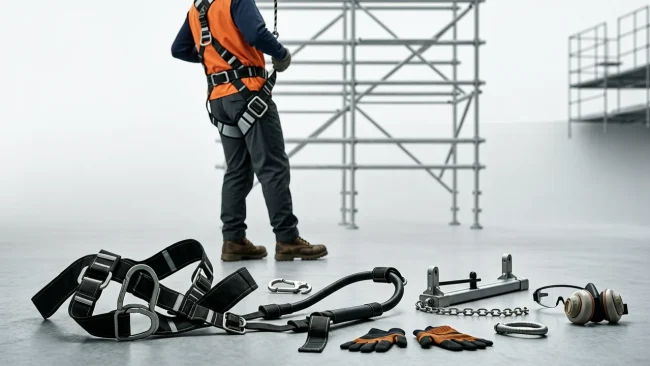
Fall Protection for Work at Height: From Full-Body Harness Selection to On-site Anchor Point Management

The article focuses on fall protection in work at height in building construction and industrial maintenance, explaining the limitations of half-body harnesses and the role of full-body harnesses in distributing impact forces, and introduces shock-absorbing lanyards that absorb kinetic energy, anchor point load-bearing capacity, the principle of anchoring high and working low, and on-site management requirements such as pre-use visual inspection and hands-on training, emphasizing that equipment selection and the safety management system must be implemented together.

From Passive Response to Active Prevention: Practical Paths for Risk Identification and Hazard Investigation

The article points out that industrial production safety accidents mostly stem from unidentified risks and long-accumulated hidden hazards, and that enterprises should shift away from a “firefighting” emergency-response model and carry out systematic risk identification and hazard investigation from the source. The article explains that risk identification should take into account process flows, equipment conditions and personnel operations, and that hazard investigation should establish standardized checklists and a closed-loop management mechanism. It also emphasizes matching personal protective equipment for hearing, respiratory, head and other protection according to the type of risk, so as to promote the normalization and institutionalization of safety management.