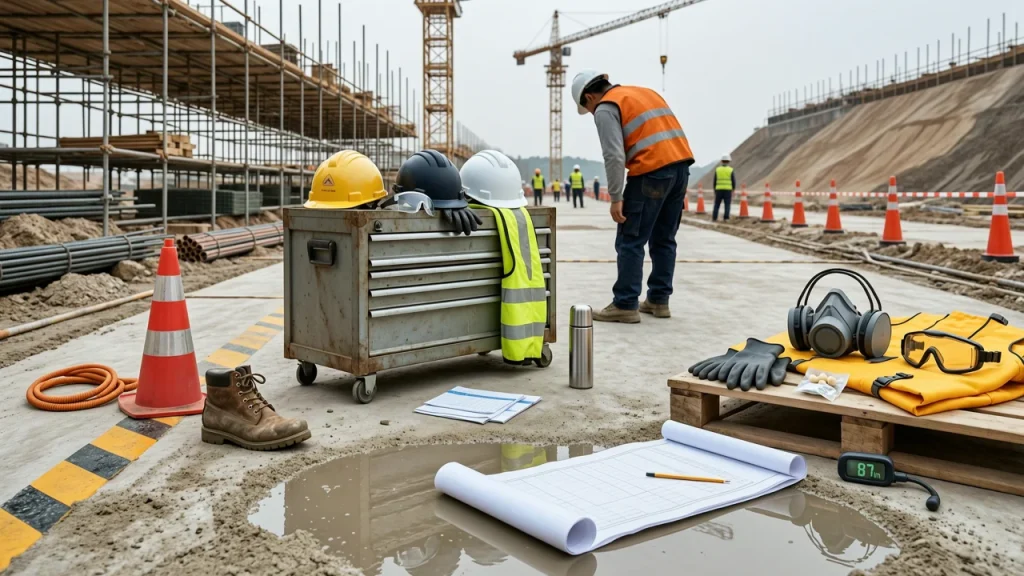
Water conservancy engineering construction faces complex natural environments and ever-changing working conditions. Open-air operations, cross-construction, and the frequent use of heavy machinery make on-site safety hazards diverse. For corporate safety managers and EHS officers, accurately identifying risks and implementing protective measures is the core prerequisite for ensuring project progress.
In scenarios such as slope excavation and dam pouring, being struck by objects and falls from height are common hazards. Frequent on-site material handling and wide-ranging equipment operations can easily lead to flying rocks or falling objects. In the event of an accident, workers' heads are the first to be affected, making standardized head protection a top priority in on-site management.
For water conservancy site environments, the selection of head protection equipment must not only meet impact resistance standards but also consider comfort for prolonged outdoor wear. Safety helmets with good breathable design and reasonable weight distribution can reduce workers' resistance caused by stuffiness, thereby effectively increasing actual wear rates.
In addition to physical injuries, mechanical noise is also a chronic hazard that is easily overlooked. The operation of large excavators, crushers, and generator sets generates high-intensity noise. If personnel are exposed for long periods without effective protection, irreversible hearing damage can easily occur, seriously affecting occupational health.
To control noise hazards, EHS teams should establish noise zones based on measured exposure and require hearing protection where needed. Earplugs or earmuffs should provide appropriate attenuation for the measured levels and, in wet and dusty environments, should also be selected for suitable resistance to moisture and contamination.
In confined space construction such as water diversion tunnels, dust and harmful gases pose prominent threats. Drilling, blasting, and concrete spraying release large amounts of dust and exhaust gases. Due to limited ventilation in underground spaces, harmful substances tend to accumulate, posing a serious threat to workers' respiratory systems.
Respiratory protection is essential where airborne contaminants are present. Select particulate respirators for dust hazards and air-purifying respirators with appropriate gas/vapor cartridges only after the contaminant and concentration have been identified and the atmosphere is suitable for air-purifying protection. Establish and follow a documented replacement schedule for particulate filters and gas/vapor cartridges.
Safety at water-conservancy construction sites requires a systematic approach. Hazards ranging from falling objects and noise to dust and toxic gases call for appropriate PPE. Procurement and EHS teams should select equipment according to the actual risks and reinforce on-site supervision.
News source:Safety Management Network, 2026-05-15: Common safety hazards at water conservancy construction sites... This article only interprets PPE knowledge based on public news topics.