
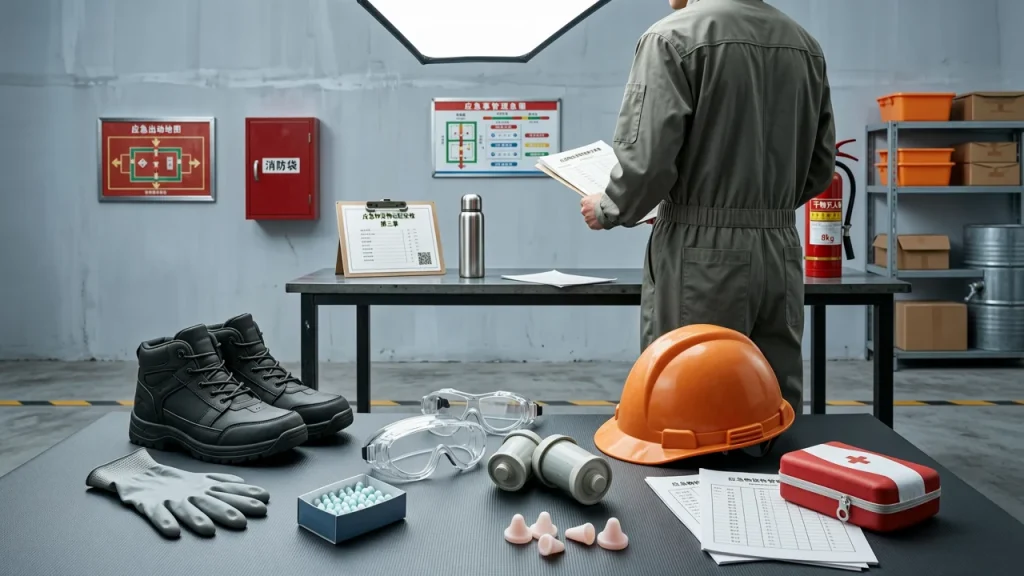
The Ministry of Emergency Management recently issued guidance on the Guidelines for Emergency Response Plan Preparation - Part 1: General Principles. For EHS and safety teams, emergency planning is both a compliance requirement and a practical way to protect employees. One area that is often overlooked is making sure the right emergency supplies and PPE are available for the scenarios in the plan.
When preparing emergency plans, many enterprises tend to fall into the misconception of emphasizing procedures over supplies. The plan may be comprehensive, but the emergency supply reserve list often shows mismatched protection levels or insufficient quantities. Once an emergency occurs, if rescue personnel lack appropriate protective equipment, they may not only fail to effectively carry out rescue operations but also cause secondary injuries.
For common industrial emergencies such as fires or chemical leaks, respiratory protection is a top priority in emergency response. In the material support section of the plan, respiratory protection standards for different hazardous scenarios must be clearly defined. For example, in the initial handling of toxic and harmful gas leaks, equipping rescue personnel with suitable respiratory protective equipment is an indispensable prerequisite.
In addition to respiratory protection, comprehensive protection in complex environments is equally critical. In emergency scenarios with explosion or collapse risks, the site is often accompanied by flying debris and high-decibel noise. Therefore, the emergency reserve list should also include head protection equipment such as safety helmets that meet standards, as well as hearing protection products that maintain clear communication in high-noise environments.
For corporate procurement departments, the selection of emergency PPE should not be based solely on price, but also on applicability and ease of maintenance. Emergency supplies are often stored for long periods, requiring the selection of products with stable materials that are easy to inspect daily. At the same time, procurement should work closely with the EHS department to precisely match protection levels based on the specific risk sources identified in the plan.
The vitality of an emergency plan lies in its execution, and the effectiveness of emergency supplies lies in drills. Enterprises should regularly conduct practical drills based on their emergency plans, testing the wearing comfort of emergency protective equipment and whether the reserve quantities are reasonable. Through continuous review and optimization of the supply list, management requirements can be transformed into a reliable protection protecting frontline employees.
News source:Ministry of Emergency Management of the People's Republic of China, 2026-08-04: "Interpretation of the Guidelines for the Preparation of Emergency Response Plans for Emergencies - Part 1: General Principles" 2026-08-04 16:38. This article only provides PPE knowledge interpretation based on public news topics.