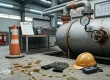

Recently, multiple regions have activated geological disaster emergency responses due to extreme weather. For industrial enterprises located in mountainous areas or involved in earthwork operations, disasters such as landslides and collapses not only threaten plant safety but also pose challenges to production. During the disaster warning and investigation phase, the on-site environment is complex, and EHS managers must place high importance on employees' personal protection.
Hazard inspections and post-disaster cleanup can expose workers to falling rock, soil movement, loose structures, dust, and mechanical noise. PPE should be selected for these specific hazards before emergency work begins.
When working around damaged buildings, head protection is of utmost importance. Investigators must wear safety helmets to withstand the impact of falling rocks. When selecting helmets, in addition to focusing on impact resistance and penetration resistance, the firmness of the chin strap should also be checked to ensure the helmet does not fall off when employees climb or work with their heads down.
Geological disturbances or partial collapses can easily raise high concentrations of dust, and if pipelines are affected, harmful gas leaks may also occur. At sites with unknown air quality, equipping workers with efficient respiratory protection is crucial. Dust-proof or gas-proof equipment should be reasonably selected based on the environment to block the inhalation of harmful substances.
Post-disaster repairs require large machinery to operate at high frequency, and on-site noise often exceeds occupational exposure limits. Prolonged exposure to strong noise can cause irreversible hearing damage. The EHS department should provide hearing protection equipment that meets noise reduction standards and supervise personnel to wear it properly throughout the process.
Emergency PPE stocks should reflect the actual response scenarios. Companies should regularly review and update supplies based on local geological risks and train employees in correct fit, use, and inspection of the equipment.
Natural disasters can develop quickly, so organizations need both a practical emergency plan and reliable protective equipment. Integrating geological-disaster preparedness into routine EHS management and applying effective risk controls helps protect employees when conditions deteriorate.
News source:Ministry of Emergency Management of the People's Republic of China, 2026-06-20: "The Ministry of Emergency Management activated a Level IV national geological disaster emergency response for Anhui, Hubei, Hunan, and Guizhou on 2026-06-20 21:33." This article only interprets PPE knowledge based on public news topics.