
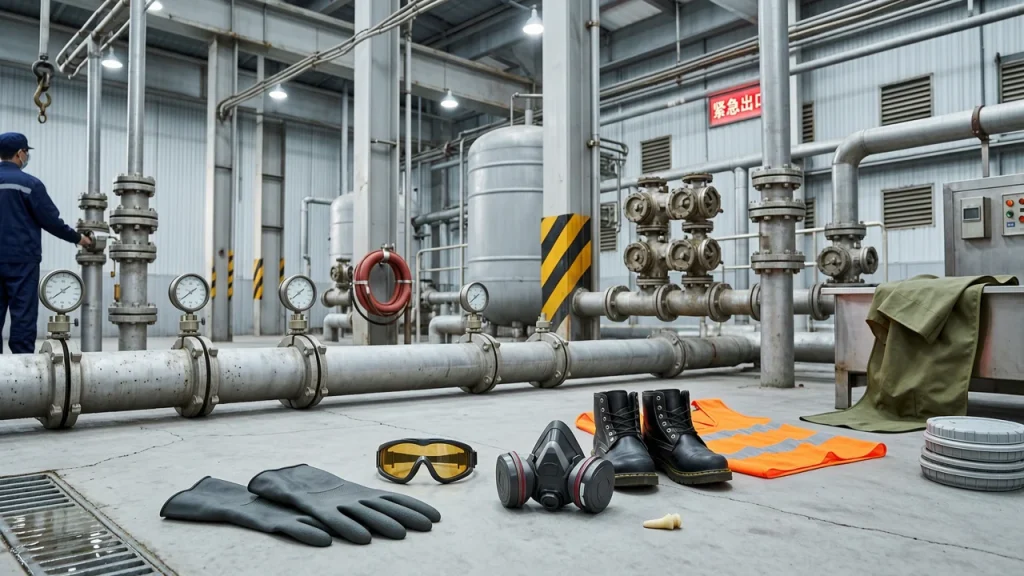
The core philosophy of chemical process safety management lies in the systematic control of risks throughout the entire production process. Within the layered safety protection system, Personal Protective Equipment (PPE) is typically regarded as the last line of defense for protecting employees. However, in complex chemical production environments, the effectiveness of this line of defense directly determines the severity of accident consequences.
In actual on-site management, a common misconception is that PPE selection is detached from process risk assessment. When introducing new processes or replacing chemicals, some enterprises tend to focus on equipment modification and interlock protection, while overlooking the potential exposure risks that on-site operators may face during routine inspections or abnormal operating conditions, resulting in a mismatch between protective equipment and actual hazards.
To overcome this misconception, EHS managers must proactively participate in process hazard analysis. For toxic or harmful gases and dusts that may be encountered, appropriate respiratory protection equipment should be matched based on specific chemical characteristics, concentration, and exposure time. For example, accurately selecting the appropriate gas filter cartridge for a half mask or a supplied-air respirator to ensure effective protection during emergency conditions such as leaks.
Another easily overlooked misconception is underestimating the combined effect of multiple risks at chemical sites. Chemical plant areas often simultaneously present multiple hazards such as chemical splashes, impact from objects, and high noise levels, and a single protective measure cannot address this composite risk environment.
In the face of composite risks, systematic selection and compatibility assessment are particularly critical. In areas with risks of mechanical injury and chemical splashes, in addition to equipping professional protective clothing, it is also necessary to standardize the wearing of safety helmets with impact resistance and corrosion resistance for head protection. Meanwhile, for high-noise areas such as pumps, appropriate hearing protection such as earmuffs or earplugs should be reasonably configured, ensuring that various protective equipment does not interfere with each other when worn and does not affect the overall protective effect.
Process safety can be weakened when procurement is prioritized over training and on-site supervision. Providing PPE is only one part of the program; frontline personnel must also know how to use, inspect, and respond with the equipment correctly.
PPE requirements should be integrated into routine process-safety inspections and management-of-change procedures. Regular training, on-site supervision, and respirator fit testing help ensure that workers can use the equipment correctly. PPE management is most effective when it is part of the broader process-safety management system.
News source:Safety Management Network, 2026-05-29: "Chemical Process Safety Management...". This article only provides PPE knowledge interpretation based on public news topics.