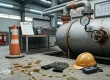

Chemical manufacturing and hazardous-material operations can involve toxic releases, fire and explosion hazards, and high noise. EHS and procurement teams need a PPE program based on the actual hazards rather than standard issue lists or past practice. In workplaces with overlapping hazards, PPE must be selected as part of the overall risk-control strategy.
In chemical production and storage areas, VOCs, acid gases, and fine particulates may present respiratory hazards. Respirator selection should be based on air-monitoring data, contaminant type, and concentration. The correct cartridge or filter and facepiece must be selected, and fit testing carried out where required to verify that the respirator can provide the intended protection.
In addition to invisible chemical risks, physical injuries cannot be ignored. Chemical plant areas have dense pipelines and frequent three-dimensional cross operations, and the head faces dual threats from falling object impacts and accidental collisions. In flammable and explosive areas, head protective equipment also needs to have antistatic performance to avoid secondary accidents caused by static electricity accumulation. Therefore, selecting head protection products that meet standards and adapt to the special on-site environment is a key part of site management.
Furthermore, areas such as chemical pump rooms and compressor rooms have long-term high-intensity mechanical noise. Hearing damage is hidden and irreversible, often overlooked by frontline employees. When implementing hearing protection, enterprises should not only provide earplugs or earmuffs with appropriate noise reduction ratings but also pay attention to employees' wearing comfort and communication needs, thereby increasing their willingness to actively wear protection in noisy environments.
In actual site management, the biggest misconception is often that "distribution equals compliance." The vitality of personal protective equipment lies in correct fit and use. Safety management personnel need to shift their focus from simple material procurement to wearing training, on-site supervision, and regular consumable replacement mechanisms. Only when employees understand the principles of protection can safety systems be transformed into conscious actions.
Chemical-plant safety requires a systematic approach. Risk assessment, risk-based equipment selection, and strict site controls must work together. By continuously improving respiratory, head, and hearing protection, organizations can reduce worker exposure and support safe, reliable operations.
News source:Safety Management Network, 2026-05-11: 《《Chemical and hazardous chemical production and operation enterprises…》. This article only interprets PPE knowledge based on public news topics.