Recently, the Ministry of Emergency Management activated a Level-IV national geological disaster emergency response for Shaanxi, Gansu, and other regions. With extreme weather events occurring frequently during the flood season, the risks of landslides and debris flows have increased significantly. For factories and outdoor projects located in mountainous areas or regions with complex geological conditions, this poses a practical challenge for corporate EHS management.
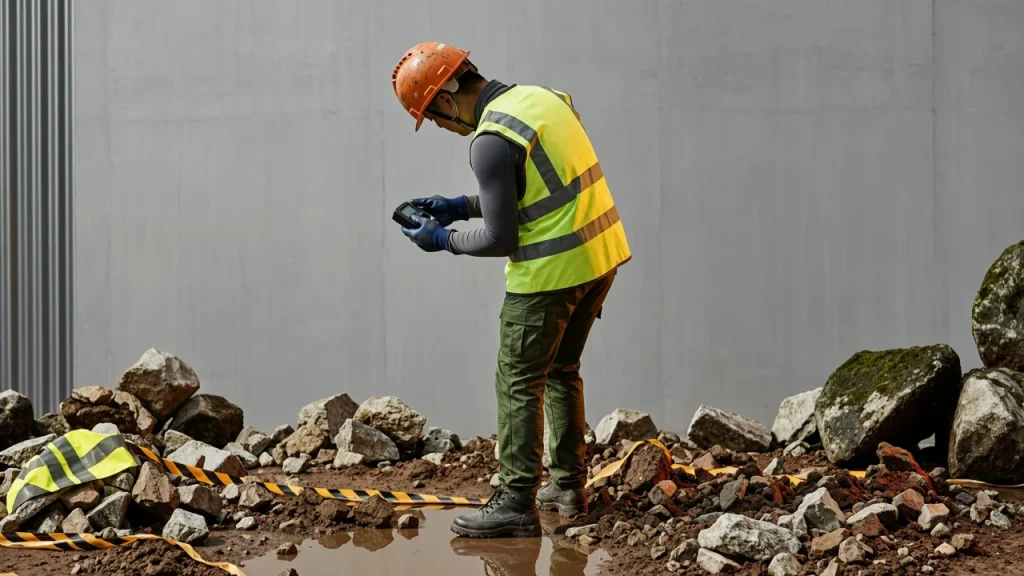
During periods prone to geological disasters, the on-site environment can change rapidly. In rescue operations, personnel must not only contend with the complex natural environment but may also face the threat of secondary disasters. Formal risk assessment and the proper selection of personal protective equipment are the fundamental lines of defense for ensuring the safety of frontline workers.
Given the most prominent risks of falling rocks and flying debris at geological disaster sites, head protection is of paramount importance. In areas prone to debris flows or landslides, workers must wear safety helmets that meet relevant standards. High-quality head protection equipment can absorb impact energy, effectively prevent lateral compression, and provide critical protection.
After a geological disaster, heavy airborne dust and hazardous gases may be present, particularly where facilities have been damaged. Safety managers should base respiratory-protection decisions on atmospheric monitoring and hazard assessment. Use suitable particulate respirators for dust; if the atmosphere is unknown, oxygen-deficient, or IDLH, use appropriate positive-pressure atmosphere-supplying respiratory protection such as SCBA.
Rescue sites are typically accompanied by the roar of heavy machinery. High noise levels not only damage hearing but also affect the transmission of instructions. When providing professional hearing protection equipment, it is recommended to choose noise-reducing earmuffs with communication functions, ensuring that workers can maintain clear and efficient communication while effectively protecting their hearing.
In addition to equipment selection, daily on-site management is equally critical. Enterprises should improve geological disaster emergency plans in advance and conduct regular drills. After an emergency response is activated, the inspection system for protective equipment wearing must be strictly enforced to ensure that every item is within its validity period and in good working condition, eliminating any reliance on luck.
Natural-disaster preparedness is fundamentally preventive. Greater risk awareness, appropriate PPE selection, and disciplined site management can reduce the threats that geological disasters pose to workers and operations.
News source:Ministry of Emergency Management of the People's Republic of China, 2026-07-31: "Ministry of Emergency Management Activates Level-IV National Geological Disaster Emergency Response for Shaanxi and Gansu 2026-07-31 08:43". This article only provides PPE knowledge interpretation based on public news topics.