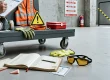

Recently, national authorities dispatched 10,000 central disaster-relief supplies to Qinghai and activated a government-society coordination mechanism, highlighting the central role of emergency material reserves in disaster prevention and mitigation. For corporate safety management, this is also an important opportunity to review one's own emergency material reserve system.
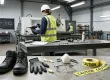
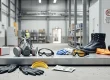
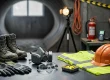
When many enterprises compile emergency plans, they tend to focus on daily-life relief supplies or conventional medical first-aid kits, while easily overlooking the strategic reserve of professional Personal Protective Equipment (PPE). In secondary risks triggered by sudden disasters, a lack of professional protection can severely hamper initial rescue and emergency evacuation operations.
Take urgent scenarios such as earthquakes or damaged factory structures as an example: the risk of falling objects surges on site, making head protection equipment the fundamental line of defense for personnel safety. Maintain appropriate stocks ofing head protection items such as safety helmets that meet standards in the emergency material warehouse can significantly reduce the probability of secondary injuries to personnel during evacuation and rescue operations.
If natural disasters are accompanied by dust, chemical leaks, or thick smoke from fires, the respiratory tract faces a major threat. Equipping appropriate respiratory protection is key to ensuring that emergency command and rescue personnel can operate safely. For different types of potential airborne hazards, enterprises need to assess in advance and stock corresponding protective masks or gas filter cartridges.
Emergency PPE stockpiling requires more than purchasing and storage. Safety managers should maintain an up-to-date inventory, monitor the shelf life of consumables such as respirator filters and cartridges, and ensure that equipment is serviceable and ready when needed.
In addition, material reserves must be integrated with routine emergency drills. Enterprises should regularly organize training for employees on donning emergency protective equipment, ensuring that in highly stressful disaster scenes, every employee can quickly and correctly use the relevant equipment, thereby realizing its protective effectiveness.
Disaster preparedness requires coordination at both government and enterprise levels. Organizations should systematically plan, inspect, and maintain emergency PPE stocks as part of a broader preparedness program so equipment is available and serviceable when an emergency occurs.
News source:Ministry of Emergency Management of the People's Republic of China, 2026-06-16: "The Office of the National Commission for Disaster Reduction, together with the Ministry of Emergency Management and the National Food and Strategic Reserves Administration, dispatched 10,000 central disaster-relief supplies to Qinghai and activated a government-society coordination mechanism to support disaster relief and assistance for affected people, 2026-06-16 20:46." This article only interprets PPE knowledge based on public news topics.