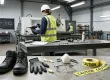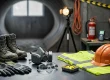

Recently, news of emergency engineering rescue teams rushing to the front line of disaster relief has drawn widespread attention. At rescue sites of various natural disasters and emergencies, the environment is often rapidly changing and full of unknowns. For corporate EHS and safety management personnel, this is not only a test of emergency response mechanisms, but also highlights the importance of personal protective equipment management under extreme working conditions.
Emergency-response sites can present multiple hazards at the same time, including falling debris, mud and slippery ground, exposed reinforcing steel, and possible hazardous-gas releases. Routine workplace PPE may not provide adequate protection in these conditions. Emergency teams need equipment selected specifically for the hazards identified at the site.
In terms of head and foot protection, rescue personnel need to cope with high-intensity physical impacts and complex ground conditions. Safety helmets must not only have excellent impact resistance and penetration resistance, but also be lightweight to reduce neck fatigue. Footwear needs to be equipped with safety shoes that offer toe protection, penetration resistance, and outsoles with strong grip to ensure stability when walking on rubble and mud.
Protection for the torso and hands should not be overlooked. Emergency rescue suits should be made of high-strength, abrasion-resistant fabrics and feature high-visibility reflective strips to ensure operational safety at night or in low-visibility environments. For hand protection, gloves that combine cut resistance with touchscreen flexibility should be selected, allowing rescue personnel to move heavy objects while also performing delicate instrument operations smoothly.
Where rescue sites involve airborne dust or unknown gases, respiratory protection is critical. Based on atmospheric testing, responders should be provided with appropriate respiratory protection or emergency escape respirators to reduce the risk of acute poisoning and respiratory injury.
Beyond equipment selection, the on-site PPE management mechanism is equally crucial. Enterprises should establish an independent emergency PPE storeroom, with dedicated personnel management and regular inspections. Key checks should focus on whether rubber parts are aging, whether gas filter cartridges have expired, and whether structural components have hidden cracks, ensuring that all emergency equipment can be deployed at any time in critical moments and remains in good working condition.
Emergency rescue is a race against time. A well-designed personal-protection program gives responders reliable protection. By combining hazard anticipation, appropriate equipment selection, and disciplined management, organizations can better protect rescue personnel in complex emergency environments.
News source:Ministry of Emergency Management of the People's Republic of China, 2026-06-09: "The Ministry of Emergency Management dispatched engineering emergency rescue teams to urgently support the rescue front line in Hechuan, Chongqing, 2026-06-09 08:57." This article only interprets PPE knowledge based on public news topics.