Recently, a flash flood occurred in a scenic area in Weiyuan County, Dingxi City, Gansu Province. The National Flood Control Office and the Ministry of Emergency Management have been continuously coordinating emergency response efforts and have dispatched a working group to the site. The frequent occurrence of extreme weather has once again sounded a safety alarm for flood control, flood fighting, and emergency rescue work, and has also placed higher demands on on-site safety management.
Flash flood disasters are characterized by sudden onset and rapid currents, and the floodwaters often carry large amounts of sediment, branches, rocks, and other floating debris. In such a complex rescue environment, rescue personnel not only face the risk of drowning but are also highly susceptible to secondary injuries from impacts or heavy object strikes, making the on-site risks highly unpredictable.
In the face of natural disasters, safety management for rescue teams must be proactive. Before entering high-risk sites, commanders need to conduct strict risk assessments to ensure that every rescuer is wearing compliant professional protective equipment. Blind rescue attempts not only fail to effectively provide disaster relief but also increase unnecessary casualties.
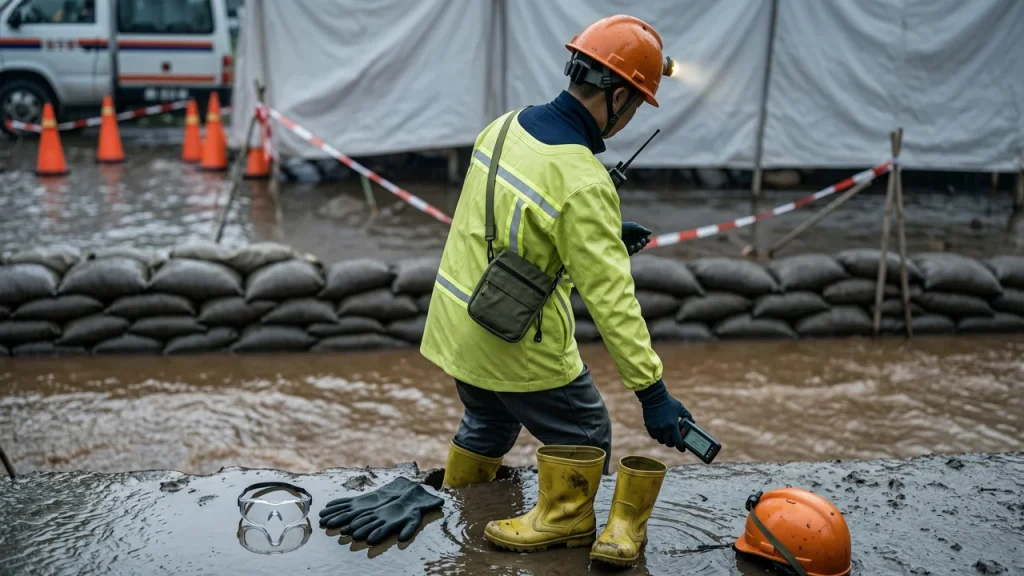
In complex water environments and geological disaster sites, head protection is of paramount importance. Hard objects carried in floodwaters can easily cause fatal blows to the head, so rescue helmets with secure chin straps, excellent impact resistance, and drainage design must be provided. Professional head protection equipment can effectively absorb impact forces and reduce the risk of collisions and crushing injuries.
In addition, the sediment churned up by floodwaters and potential overflow impurities pose threats to the respiratory tract and face of rescue personnel. When clearing mud or conducting close-range wading operations, properly combining respiratory protection equipment with facial shields can effectively prevent the inhalation of sediment and injuries from splashes, safeguarding the health of rescue personnel.
Beyond head, face, and respiratory protection, foot and torso protection must not be overlooked. Rescue personnel need to wear professional rescue boots with slip resistance and puncture resistance to cope with underwater reefs, and must consistently wear life jackets that provide sufficient buoyancy to withstand the impact of undercurrents.
Natural disaster rescue is a comprehensive test of the emergency management system. Corporate EHS managers and rescue departments should regularly inventory, maintain, and update flood control emergency supplies to ensure that all types of personal protective equipment can effectively function at critical moments, building a reliable layer of protection for those who rush into danger.
News source:Ministry of Emergency Management of the People's Republic of China, 2026-07-26: "A flash flood occurred in a scenic area in Weiyuan County, Dingxi City, Gansu Province. The National Flood Control Office and the Ministry of Emergency Management have been continuously coordinating emergency response efforts and have dispatched a working group to the site 2026-07-26 18:55." This article only provides PPE knowledge interpretation based on public news topics.