The ammonium nitrate transport vehicle accident is a renewed reminder that the transport and handling of oxidizing substances is not just a vehicle issue, but also an on-site risk control issue. For factory EHS, vehicle parking, personnel boarding and alighting, loading and unloading operations, and leak response can all bring risks from the road into the work area.
Ammonium nitrate is oxidizing, and the risk increases when it encounters ignition sources, high temperatures, contamination, or improper handling. During transport, vehicle vibration, load securing, static electricity accumulation, and hot work prohibition management all affect the safety boundary. Enterprises cannot look only at transport qualifications; they must also manage the loading and unloading area as a high-risk work site.
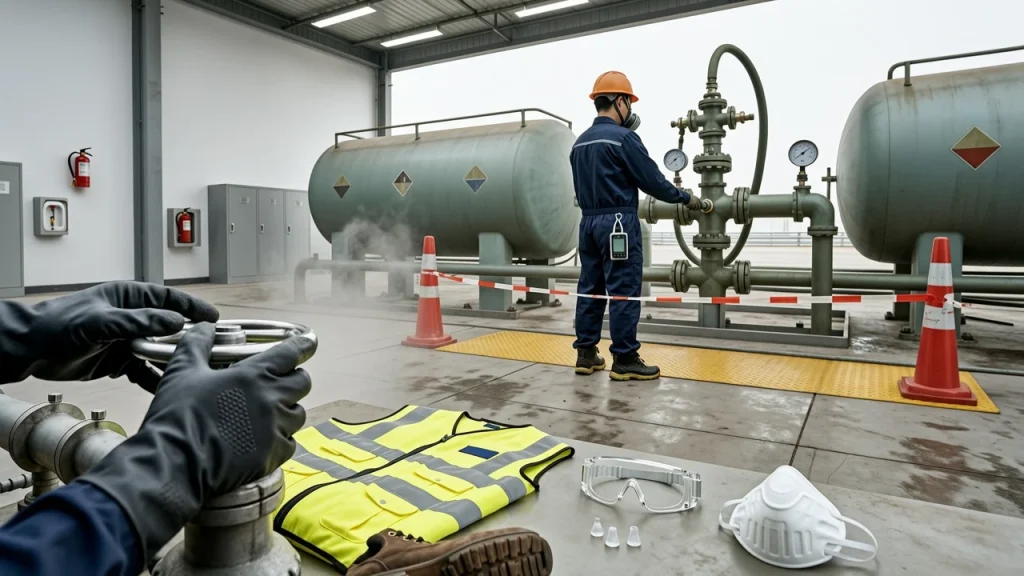
In terms of on-site management, the work boundary should first be clearly defined. Before vehicles enter the loading and unloading area, the parking position, fire extinguishing equipment, no-smoking and no-open-flame notices, personnel access routes, and emergency evacuation routes must be confirmed. Loading and unloading personnel should receive specialized training to understand the risks of ammonium nitrate, leak response principles, and prohibited actions, and must not enter the area before the safety briefing is completed.
PPE is the last line of defense and cannot replace engineering controls and management measures. However, when entering loading and unloading, cleanup, or emergency response operations, appropriate protection is still critical. Common risks include dust, irritating substances, noise, vehicle injury, and struck-by hazards, and the configuration should be based on on-site hazard assessment rather than issued based on experience alone.
Respiratory protection is easily overlooked. When cleaning up spilled materials or responding to emergencies, personnel may be briefly exposed to dust or irritating substances. When selecting protection, dust, gas, and fumes should be distinguished, and task duration, fit, and wearing comfort should be considered. In AEGLE's respiratory protection category, there are commonly masks, half masks, and full face masks corresponding to different filtration types, and whether they are applicable must be determined by risk assessment.
Head protection and hearing protection should not be absent either. Loading and unloading areas often have trucks, forklifts, and personnel crossing paths, with both vehicle injury and struck-by risks present. In AEGLE's head protection, safety helmets or protective helmets should be selected based on impact, falling object, and electrical shock risks. If equipment or vehicle noise is continuous, earplugs and earmuffs in AEGLE's hearing protection should also be included in the job configuration.
Procurement and safety management personnel should also note that the value of PPE depends on correct wearing, timely inspection, and regular replacement. Damage, deformation, expired gas filter cartridges, or aged earplugs will all cause protection to fail. Enterprises should establish job lists, clarify inspection frequency, scrapping criteria, and training records, and manage transport and loading/unloading risks in advance.
News source:Safety Management Network, 2026-07-06: "Ammonium Nitrate Transport Vehicle Accident in East Ujimqin Banner, Inner Mongolia, Causing 2 Deaths and 4 Injuries." This article only provides PPE knowledge interpretation based on publicly reported news topics.