Safety training at construction sites often begins with induction education, pre-shift meetings, and specific safety briefings. Sign-in sheets, exam papers, and photo records show that training has taken place; but what truly determines on-site safety is whether employees can translate requirements into concrete actions. Especially in processes involving head protection, hearing protection, and respiratory protection, issuing equipment does not mean it will be used correctly, and knowing how to use it does not mean knowing how to select it.
Many on-site issues are not due to employees being unaware of the need for protection, but rather that the protection method does not match the day's work. If the same crew cleans dust in the morning and enters a noisy cutting area in the afternoon, and training only emphasizes “wear as required” without explaining the changing risks associated with different processes, employees are likely to stick to old habits and downgrade protection that should be upgraded back to the minimum requirement.
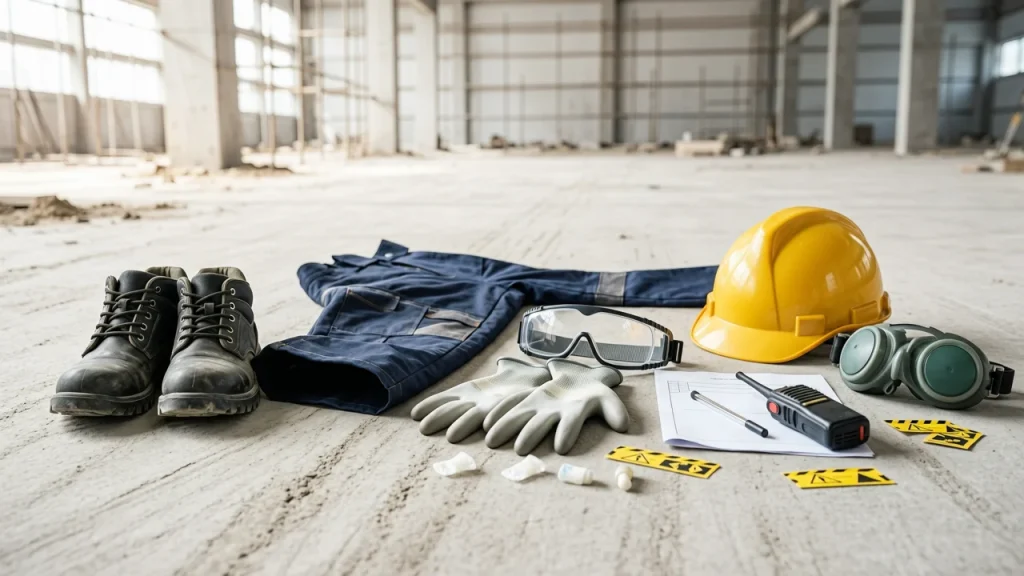
For safety managers, training should be more closely aligned with the day's work content. Before entering the site, they can first identify whether there are risks such as being struck by objects, falls from height, dust, noise, sparks, or confined spaces, and then incorporate the corresponding Personal Protective Equipment (PPE) requirements into the briefing content. Procurement personnel can also participate in this process, turning “what to issue” into “why to issue”, so that PPE configuration and on-site risks speak the same language.
Looking at AEGLE's common head protection, hearing protection, and respiratory protection, the key to selection is not that thicker is better, nor that more expensive is safer. For head protection, attention should be paid to whether the wearing size, chin strap, and brim suit the working posture; for hearing protection, consider the fit, long-term wearing comfort, and whether it affects communication; for respiratory protection, look at the filtration target, mask seal, and breathing resistance. Employees are more likely to wear protection consistently if they are willing to wear it.
Post-training checks are equally important. Safety managers should not just ask “are you wearing it?”, but also check whether it is worn correctly: whether the safety helmet's chin strap is fastened, whether earplugs are inserted properly, whether the mask fits the face, and whether the filter material shows obvious damage or dampness from sweat. If employees are found unwilling to wear protection, the reasons should be recorded to determine whether it is a size issue, style discomfort, or whether the working conditions indeed require adjustments to the protection plan.
The significance of safety training at construction sites is not to add another record, but to form a closed loop of risk identification, PPE selection, usage checks, and procurement feedback. When employees can articulate why they wear protection today, where it is uncomfortable, and how to wear it correctly, training truly enters the site and can reduce avoidable injuries caused by inadequate protection.
News source:Safety Management Network, 2026-06-30: 'Safety Training at Construction Sites...'. This article only provides PPE knowledge interpretation based on public news topics.