PPE selection is not about issuing labor protection supplies, but part of risk control

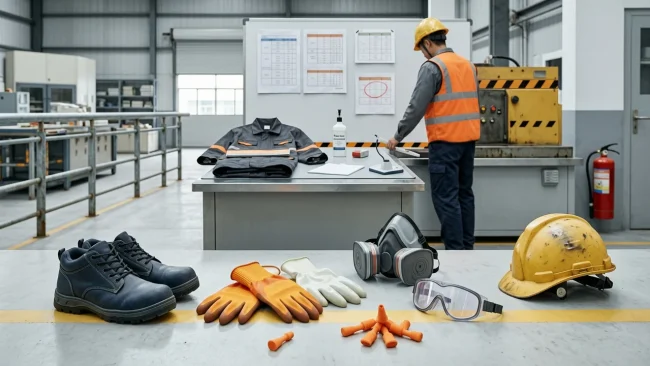
The article points out that factory sites often reduce PPE management to “issuing the equipment,” but selection should first return to the work scenario to identify hazards. Companies need to follow principles such as graded matching, suitability, compatibility and procedures, renewal and training, and evidence documentation, selecting protective equipment based on exposure levels and actual wearing conditions, and establishing inspection, replacement, and disposal mechanisms to create traceable records, so that PPE truly serves risk control.

When receiving PPE, which quality details are most easily overlooked during incoming inspection?

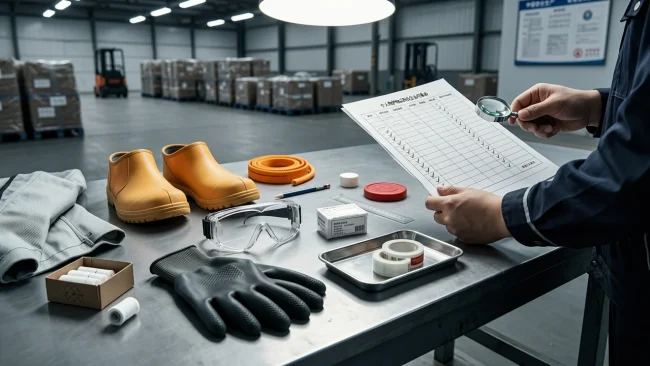
The article points out that when enterprises accept Personal Protective Equipment (PPE), they should not merely count quantities and check certificates of conformity; they need to verify the consistency between documentation and the actual products, inspect for subtle appearance defects, size suitability and clarity of markings, pay attention to storage and transportation conditions, and ensure a closed loop of acceptance records. Covering head, respiratory and hearing protection equipment, it emphasizes reducing risks entering the work site through careful attention to details.

Why can safety training at construction sites not just stop at the sign-in sheet?

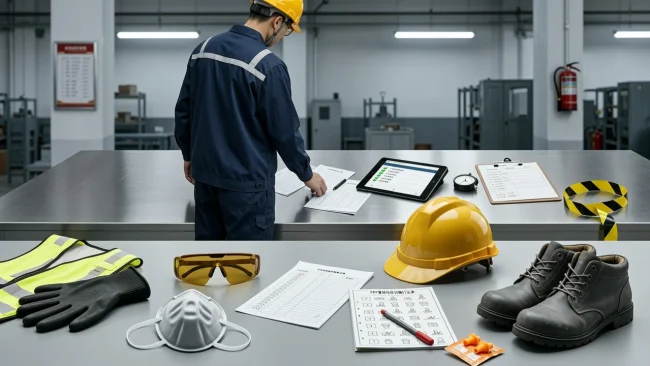
The article points out that safety training at construction sites cannot rely solely on sign-in sheets, exam papers and photos as proof; the key lies in whether employees can translate protection requirements into specific actions. For head, hearing and respiratory protection, training should identify risks in conjunction with the day's work processes, clearly explain the basis for selecting protective equipment, and after training check whether wearing is correct and record reasons for reluctance to wear, forming a closed loop of risk identification, selection, use inspection and procurement feedback.

Tunnel training should not only focus on wearing PPE: enclosed work sites require a closed-loop risk management approach

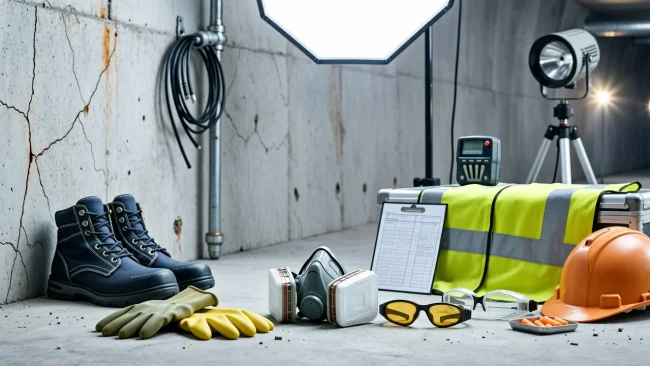
Tunnel operations involve confined spaces, insufficient lighting, and a mix of noise and dust. If safety training only emphasizes wearing protective equipment properly, it is difficult to cover real risks. The article points out that specific risk sources such as low-height collisions, vehicle crossings, slips, dust and noise, and evacuation routes should be clearly explained, correct wearing of head, hearing and respiratory protection should be described in conjunction with job positions, and EHS should review work permits and risk points, forming a closed loop of risk identification, PPE matching and on-site management through pre-shift inspections and on-site spot checks.

On-site Management: Hazards of Safety Helmets Being "Worn" but Not "Worn Properly"

The article analyzes the hidden risk that on-site safety helmets are “worn but not worn properly,” pointing out that problems such as not fastening the chin strap, a loose chin strap, unauthorized removal of the suspension harness, and failure to replace helmets that are expired or damaged can cause the helmet to come off or fail under impact. EHS managers need to deepen inspections from “whether it is worn” to “whether it is worn correctly” and incorporate this into daily assessments, while procuring qualified products that are breathable and properly fitting to improve compliance.

How EHS Managers Coordinate On-site Safety and Protective Equipment During the Dragon Boat Festival Holiday Combined with Early Summer High Temperatures

The period around the Dragon Boat Festival holiday is a time when safety incidents are prone to occur. Combined with the risks of early-summer high temperatures and the flood season, outdoor and confined-space operations face threats such as heatstroke, oxygen deficiency, and electric shock. Aimed at EHS managers, this article recommends conducting special risk inspections and emergency drills in advance, carefully selecting protective equipment for scenarios such as dust and high noise and strengthening supervision of its use, and also carrying out pre-holiday material inventory checks and special training to ensure a safe return to work after the holiday.

Blind Spots and Countermeasures in Corporate PPE On-Site Management: Insights from Typical Strict Enforcement Cases

Drawing on typical cases of strict workplace safety law enforcement published by the Ministry of Emergency Management, this article analyzes weak points in the on-site management of labor protection equipment in enterprises, noting that some enterprises fall into the misconception of emphasizing procurement over management and neglect hazard assessment and proper employee wearing. The article proposes countermeasures for the scientific selection and on-site training and supervision of respiratory, hearing, and head protection equipment, emphasizing the integration of PPE selection, issuance, and supervision into the EHS management system to reduce operational risks.