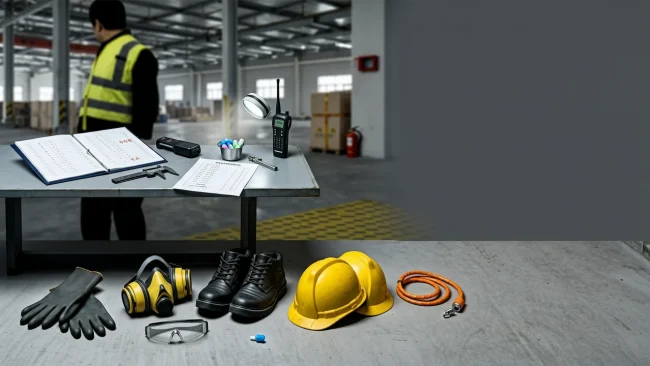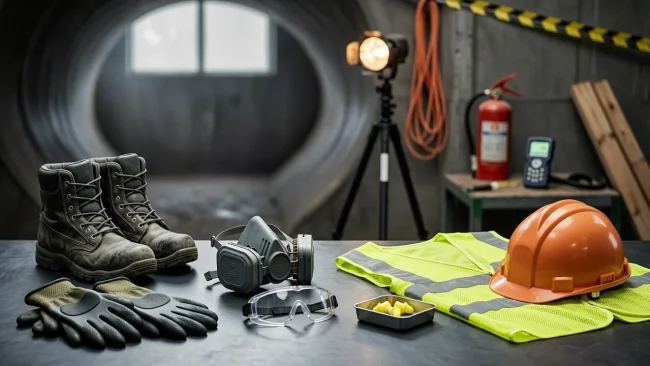
After the gas tunnel hazard interview, at which levels should PPE management begin?

Multiple units at a gas tunnel were summoned for talks due to major accident hazards, exposing whether the “people, equipment, environment” management loop is closed in high-risk operations. Drawing on this incident, the article analyzes tunnel PPE management across three layers—head, respiratory, and hearing protection—emphasizing that selection should match on-site risks, that wearing and maintenance must be implemented, and that PPE is a supplement rather than a substitute, requiring integration with engineering and management measures such as ventilation, testing, permits, and training.

The Right Way to Learn from Incident Lessons: From Review to a Closed Loop of Protection

The article points out that the true value of accident notifications lies in the details of risk exposure; reviews should first reconstruct the work scenario and determine whether the gap lies in management, inadequate engineering controls, or personal protection issues. The article recommends breaking lessons into actionable steps, involving procurement in the selection of protective equipment, and forming a closed loop of EHS inspections and pre-shift meeting reminders, turning a single injury into a replicable prevention mechanism.

Why can safety training at construction sites not just stop at the sign-in sheet?

The article points out that safety training at construction sites cannot rely solely on sign-in sheets, exam papers and photos as proof; the key lies in whether employees can translate protection requirements into specific actions. For head, hearing and respiratory protection, training should identify risks in conjunction with the day's work processes, clearly explain the basis for selecting protective equipment, and after training check whether wearing is correct and record reasons for reluctance to wear, forming a closed loop of risk identification, selection, use inspection and procurement feedback.

From open and secret inspections to on-site management: how can enterprises bridge the last mile of PPE implementation?

CCTV's "Emergency Moments" safety production inspection program exposed problems at the front line such as improper wearing of personal protective equipment and mismatched selection. The article points out that completing PPE procurement and distribution does not equal fulfilling responsibilities; without on-site supervision and guidance, protective equipment becomes ineffective. Therefore, scientific selection must be made at the source according to operational risks, and normalized training, daily inspections and respiratory protection fit testing should be used to ensure PPE is truly implemented on site.

With the normalization of “cracking down on illegal and non-compliant activities” in work safety, what should on-site PPE compliance management focus on?

CCTV's “Emergency Moments” special program on workplace safety "cracking down on illegal violations" has sent a strong signal that safety production will be strictly enforced, with the wearing and use of personal protective equipment on site becoming a key focus of inspections. The article points out that employees wearing protective equipment improperly or removing it in high-noise, dust and other areas constitutes a typical on-site violation; enterprises must start with precise PPE selection, compliant procurement, routine wearing inspections, and training and assessment, integrating compliance management into everyday on-site details.

PPE Management from an Accident Investigation Perspective: From Passive Compliance to Active Prevention

The Ministry of Emergency Management held a national video training course on disaster and accident investigation, assessment, and statistics, signaling a strengthened focus on accident traceability and precision prevention. The article notes that PPE provision and use are core review points in accident investigations, and that enterprises easily fall into the misconception that “issuing equipment equals managing it.” Companies need to ensure proper selection matching, correct wearing practices, and traceable records for head, respiratory, and hearing protection, driving PPE management from passive compliance toward proactive prevention.

Reflections Behind the Safety Month Promotional Video: Don't Let PPE Management Stop at Surprise Inspections

Starting from the national “Work Safety Month” promotional video, the article points out that enterprise PPE management commonly suffers from an emphasis on procurement over actual wearing. Using head, hearing, and respiratory protection as examples, it analyzes poor wearing compliance phenomena such as not fastening the chin strap of safety helmets, removing earplugs without authorization, and insufficient mask fit. It recommends incorporating wearing compliance into daily assessments and improving protection effectiveness through scientific selection and fit testing.

How can industrial and trade enterprises leverage expert guidance services to enhance the effectiveness of on-site PPE management

The Ministry of Emergency Management launched its 2026 expert guidance services for key industrial and trade sectors, focusing on high-risk areas such as combustible dust, confined spaces, and metal smelting. Addressing the “emphasis on provision over effectiveness” problem in PPE management at industrial and trade enterprises, the article explains that expert guidance can help companies identify the real risks behind formal compliance across the entire process—from hazard identification and selection matching to usage training and effectiveness feedback—and promote the establishment of long-term improvement mechanisms.

Behind the Work Safety Month theme poster: How enterprises can read the new direction of PPE management from visual symbols

Centered on the 2026 national “Work Safety Month” theme poster, the article interprets the PPE management orientation reflected in its visual elements: the poster emphasizes “prevention first, life paramount” and highlights the correct wearing of protective equipment such as safety helmets, safety goggles, and earplugs. The article reminds enterprises to pay attention to the fit and sustained wearing of head protection, the shift in hearing protection from “providing earplugs” to effective protection, and the selection training and fit checks for respiratory protection. It also suggests that EHS teams use the poster to conduct assessments of current PPE usage, optimize configurations, and improve training.

What Central Disaster-Relief Supply Allocation Reveals About PPE Planning and Corporate Emergency Preparedness

Recently, the Office of the National Disaster Prevention, Reduction, and Relief Committee, together with the Ministry of Emergency Management and the National Food and Strategic Reserves Administration, allocated central disaster relief supplies to Hunan and Guangxi. Drawing on this action, the article analyzes the basic support needs for personal protective equipment—including head, hand, and hearing protection—at disaster rescue sites, and notes that enterprises can learn from the principles of applicability and timeliness in national supply allocation to establish emergency PPE lists matched to risk levels, inventory rotation, and usage training mechanisms.