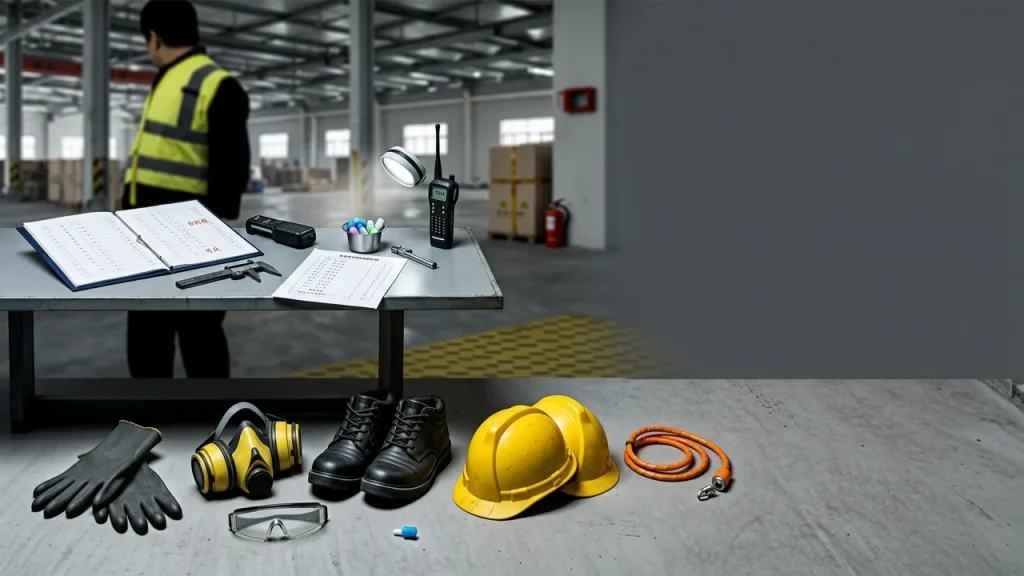
Recently, CCTV's "Emergency Moment" aired a series of special programs on unannounced safety inspections, focusing on frontline production sites. Among the many safety hazards exposed, issues such as improper wearing of Personal Protective Equipment (PPE) and mismatched selection were common. This is not only a test of an enterprise's safety management system but also a direct examination of the implementation of on-site PPE management.
Many enterprises have misconceptions about PPE management, believing that once procurement and distribution are completed, their safety responsibilities are fulfilled. However, the truth revealed by unannounced inspections is that without effective supervision and guidance on site, even the highest-standard protective equipment is rendered useless. Employees finding it troublesome to wear, wearing it incorrectly, and using it beyond its service life are the direct causes of accidents.
Improving PPE use starts with selecting equipment for the actual job. EHS teams should assess hazards before purchasing. Where falling-object hazards exist, for example, head protection must meet the required standard while remaining comfortable enough for extended wear. In high-noise areas, hearing protection should be selected from measured noise exposure so that workers are neither under- nor over-protected.
Risk-based selection is only the first step; refined on-site management is the key. Enterprises should establish a routine PPE usage training mechanism, not only telling employees that they must wear PPE but also teaching them how to wear it properly. At the same time, safety managers should integrate PPE checks into daily inspections, promptly correct violations, and enforce the mandatory scrapping and replacement of damaged or ineffective protective equipment.
For complex work environments involving dust or hazardous gases, the management of respiratory protection is particularly strict. Such operations not only require the provision of professional respiratory protection products but also the establishment of strict fit testing and regular maintenance systems. Managers must ensure that filter elements are within their service life and guide employees to conduct seal checks when wearing, ensuring that every breath is and effectively protected.
There are no shortcuts to workplace safety. Unannounced inspections are only one enforcement tool; the real objective is better risk control. Procurement and EHS teams should move from reacting to inspections toward proactively managing hazards and ensuring the right PPE is used correctly for each task.
News source:Ministry of Emergency Management of the People's Republic of China, 2026-08-15: "From August 16 to 18, at 11:50 AM, CCTV's 'Emergency Moment' will air 3 special programs on unannounced safety inspections in production 2026-08-15 08:59". This article only interprets PPE knowledge based on public news topics.