Mechanical injury is one of the most common and severe types of accidents in industrial production. In various accident reports, cases of entanglement, crushing, collision, and impact from moving machinery are frequently seen, often causing irreversible harm to workers.
Analyzing numerous mechanical injury accident cases reveals that, in addition to hardware hazards such as missing machine guards or failed safety interlock devices, workers failing to properly wear Personal Protective Equipment (PPE), harboring a fluke mentality, and engaging in unsafe operations are often key factors that exacerbate injuries.
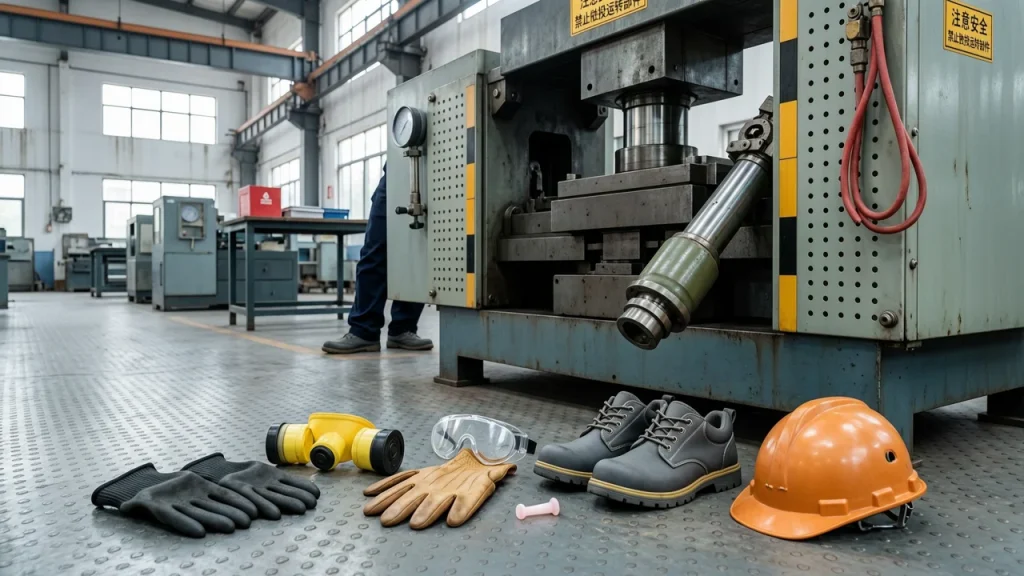
At machining and maintenance sites, risks of impact and head collisions are everywhere. Wearing compliant safety helmets and other head protection equipment that meet standards can effectively cushion the impact of accidental collisions and falling objects, serving as a fundamental line of defense to protect workers' lives.
Beyond head protection, high-speed rotating parts and flying debris from machinery are also major hazards. Workers must be equipped with professional anti-mechanical-injury gloves and eye and face protection, and strictly follow operating procedures to prevent hands from being caught or eyes from being struck by flying chips.
Additionally, many large machines generate high-intensity noise during operation. Prolonged exposure not only damages hearing but also reduces workers' concentration, significantly increasing the likelihood of operational errors and machinery-related accidents.
Therefore, in machine shops where noise exceeds limits, providing workers with comfortable hearing protection earmuffs or earplugs is crucial. This is not only a requirement for protecting occupational health but also an important safety management measure to maintain on-site focus and prevent human error.
When selecting PPE, corporate safety managers should base their choices on the risk assessment results of specific workstations, opting for equipment with appropriate protection levels and comfortable fit. At the same time, they must require employees to use PPE correctly and conduct regular machinery safety training.
Preventing mechanical injury requires a systematic approach. Machine safeguarding and other engineering controls come first, while appropriately selected PPE provides additional protection against residual hazards. Effective site management and correct PPE use are both essential.
News source:Safety Management Network, 2026-07-24: 'Mechanical Injury Accident Cases...'. This article provides PPE knowledge interpretation based solely on public news topics.