Welding operations have always been a high-incidence link for accidents in industrial manufacturing. From arc burns to inhalation of metal fumes, various accidents occur frequently, not only causing downtime losses for enterprises but also causing irreversible harm to workers' health. Analyzing the causes behind accidents, the lack of personal protective equipment or improper selection is often the core inducement.
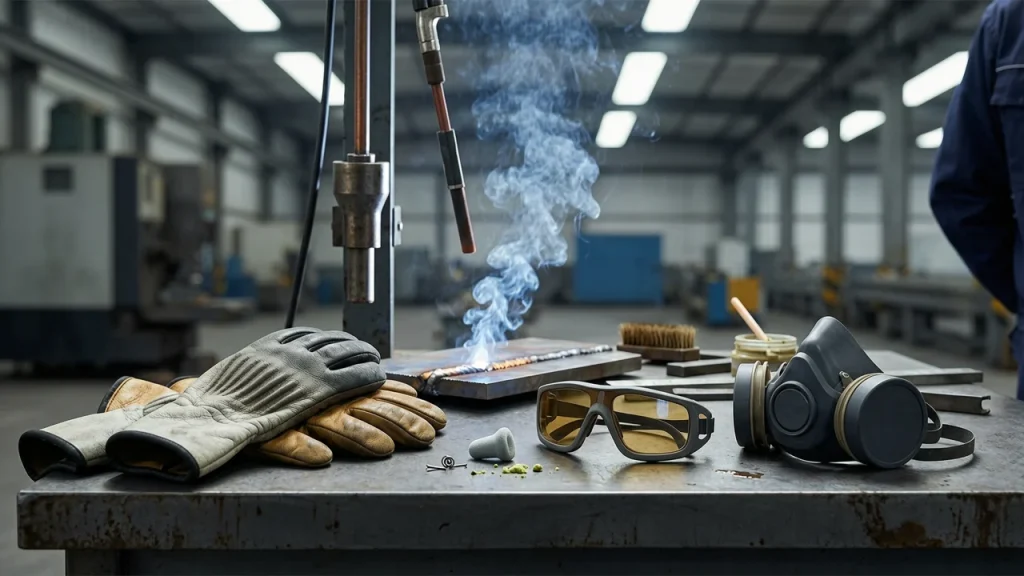
Welding fumes and harmful gases are invisible health killers. Long-term inhalation of fumes containing manganese, ozone, and other components can easily trigger respiratory diseases. When working in confined spaces, relying solely on natural ventilation is far from sufficient; professional respiratory protective equipment must be provided for welders to block the inhalation path of harmful particles at the source.
Arc light radiation and high-temperature splashes are direct threats to the eyes and face. Many accidents result from workers not wearing qualified face shields or using ordinary glasses instead of professional protection. While emphasizing facial shielding, matching head protection equipment is equally critical, ensuring the entire head area is protected from ultraviolet and thermal radiation.
In addition to light and dust, noise pollution in welding workshops cannot be ignored. Continuous high-decibel sounds generated by grinding, cutting, and some high-noise processes can lead to hearing loss in workers. In areas where noise exceeds standards, wearing appropriately fitted hearing protection is a key measure to prevent occupational deafness.
Head protection faces special challenges in welding environments. Ordinary hard hats often cannot withstand intense thermal radiation and flying sparks. Therefore, when purchasing for workshops, it is essential to confirm that the selected equipment materials have excellent flame-retardant and heat-insulating properties to compensate for the protective shortcomings of conventional helmets in extreme thermal environments.
As enterprise safety managers, it is essential to recognize that personal protective equipment is only the last line of defense in the hierarchy of risk control. While implementing various protective equipment, it is also necessary to optimize on-site ventilation systems and strengthen safety training for welders to ensure that protective equipment is correctly worn and routinely maintained.
Preventing welding-related injuries requires coordinated work controls and PPE. Appropriate PPE should be selected for the welding process, surrounding hazards, and any work-at-height exposure so that workers are protected without interfering with the task.
News source:Safety Management Network, 2026-07-23: 'Various welding operation accidents...'. This article only interprets PPE knowledge based on public news topics.