In construction and industrial maintenance, working at height is a high-risk area for safety accidents. As the last line of defense to protect personnel, the importance of fall arrest safety harnesses is self-evident. However, in actual on-site management, there are still misconceptions about the selection and use of safety harnesses.
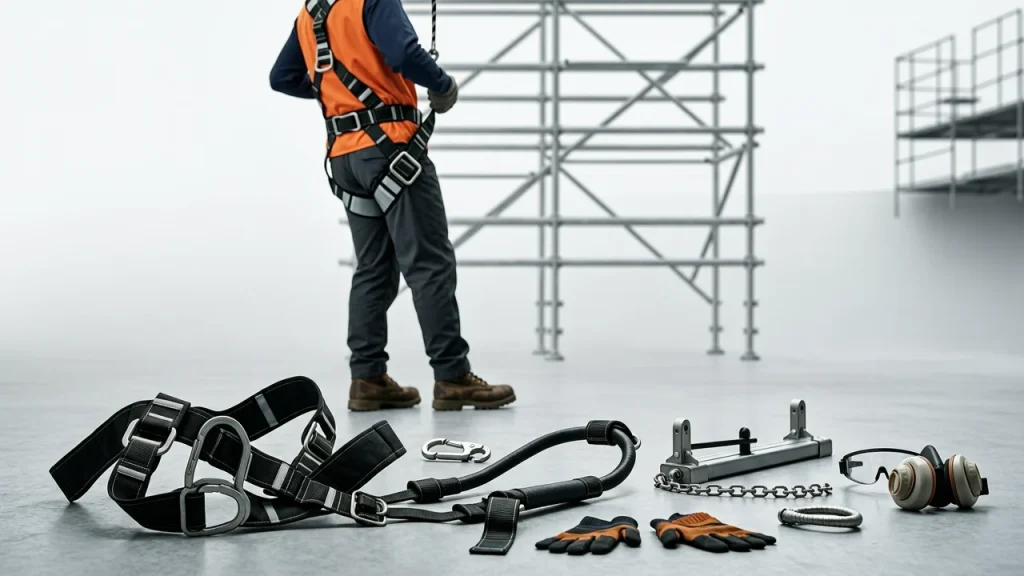
Some procurement and on-site personnel believe that equipping with a safety harness is sufficient to prevent risks, but they overlook the differences in styles. Half-body harnesses can easily cause the human body to flip at the moment of a fall, while full-body harnesses can evenly distribute the impact force across the thighs, pelvis, chest, and shoulders, making them the standard configuration for modern work at height.
In the selection of fall protection systems, in addition to the harness body, connectors and energy absorbers are equally critical. Lanyards with energy-absorbing packs can absorb huge kinetic energy through webbing tearing during a fall, controlling the impact force on the human body within a safe threshold and effectively avoiding secondary injuries.
Even when the equipment itself is compliant, anchorage selection remains critical. Anchor points must have adequate load capacity and should be positioned, where practicable, to minimize free-fall distance and swing-fall hazards.
Daily inspection and maintenance are the top priority in on-site EHS management. Workers must conduct a careful visual inspection before each use. Whether the webbing is cut or worn, whether metal fittings are deformed or corroded, whether stitching is loose—any minor damage could cause the equipment to fail at a critical moment.
The performance of protective equipment highly depends on the user's standardized operation. The company's safety department needs to regularly conduct practical training to ensure that every worker at height can correctly wear a full-body harness, adjust the tightness of the webbing in each part, and clearly understand the mandatory retirement standards for the equipment.
Preventing falls from height requires more than a single piece of equipment. Appropriate fall-protection selection, compliant anchorage, routine inspection, and worker training must function as one system. Reliable equipment combined with rigorous management provides effective protection for workers at height.
News source:Safety Management Network, 2026-07-15: "CSCEC Fall Prevention Safety Harness..." This article only interprets PPE knowledge based on public news topics.