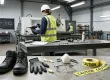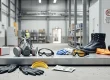

Recently, the national comprehensive fire and rescue teams officially launched their recruitment for the new year. This team, tasked with responding to various disasters and accidents, once again draws public attention to extremely high-risk operational scenarios. For corporate EHS managers, this is not only an industry update but also a crucial opportunity to re-evaluate on-site protection standards in factories.
Firefighters face life-and-death trials on the rescue front line, where the reliability of their protective equipment is the lifeline. Although most factory environments are not fire scenes, scenarios such as confined spaces, high-noise workshops, and dusty areas also harbor hidden risks. Drawing on the high-standard philosophy of fire and rescue can help companies break free from the mindset that compliance equals safety.
Take respiratory protection as an example: thick smoke in a fire scene is a fatal threat to firefighters, while harmful gases or fine dust in factories can also cause long-term damage to employees' health. When selecting equipment, companies should not merely distribute basic masks; they should thoroughly assess the types and concentrations of pollutants, match half masks or full face masks, and establish strict filter replacement mechanisms.
In terms of head protection, fire helmets boast excellent impact resistance and high-temperature tolerance. Reflecting this on industrial sites, the selection of safety helmets also needs to be tailored to local conditions. In addition to meeting basic falling-object protection requirements, special areas may require additional features such as antistatic, extreme-temperature resistance, or insulation to avoid blind spots caused by single-function equipment.
Hearing protection is a recurring challenge in both industrial and rescue settings. Because high noise can cause irreversible hearing damage, selection should consider both attenuation and wearer comfort. Protection is effective only when workers can wear earplugs or earmuffs consistently throughout the exposure period.
Even the best equipment is useless without proper use. The formidable combat effectiveness of fire and rescue teams relies on rigorous training, and companies should also integrate protective equipment donning with emergency drills. Through hands-on training, employees can develop muscle memory, ensuring they can quickly and correctly utilize the equipment's effectiveness in emergencies.
The recruitment of firefighters strengthens rescue forces and reaffirms the safety baseline. Procurement and safety management personnel in companies should take this as a lesson, systematically building a robust personal protective system-from risk identification and risk-based selection to daily training-to fortify the layer of protection for frontline employees.
News source:Ministry of Emergency Management of the People's Republic of China, 2026-06-11: "The 2026 National Comprehensive Fire and Rescue Teams Firefighter Recruitment Officially Launched 2026-06-11 10:59". This article only interprets PPE knowledge based on public news topics.