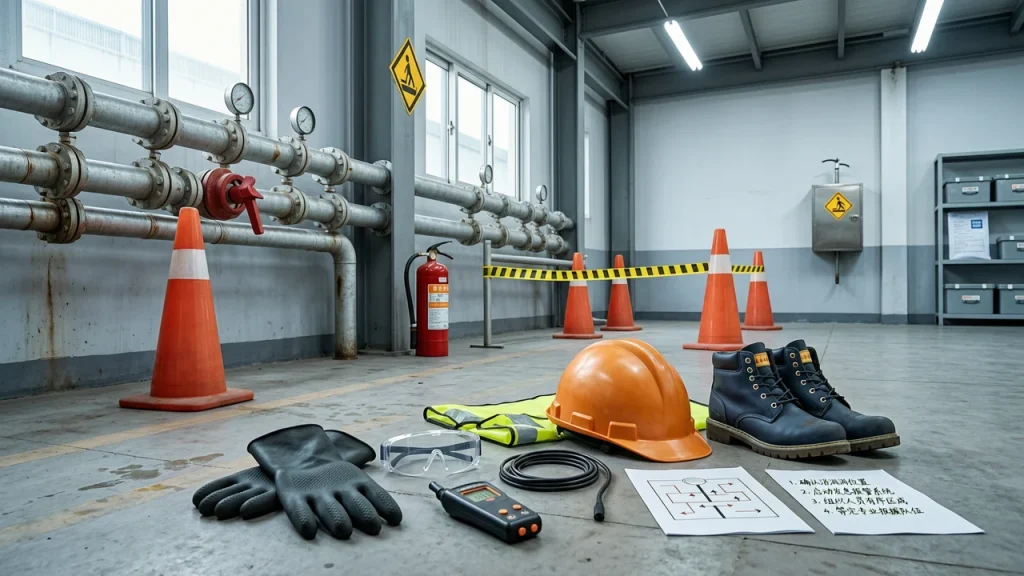
A suspected liquefied gas leak and flash explosion occurred in Huludao, Liaoning, resulting in casualties, sounding an alarm for enterprise safety. For factories, liquefied gas, fuel gas, or combustible gas leaks are not isolated incidents but a continuous risk chain from leakage, accumulation, flash explosion, to personal injury.
Once combustible gas accumulates in low-lying areas, pipe trenches, pump rooms, tank farms, confined spaces, or semi-enclosed areas, it can cause a flash explosion when exposed to open flames, electrical sparks, static electricity, or even high-temperature surfaces. Accident scenes often simultaneously present risks of inhalation injury, burns, shock waves, and flying debris, making it difficult to reduce harm through post-incident measures alone.
Many factories' risk identification remains at the equipment level, focusing on valves, flanges, pipelines, and instruments, while overlooking locations where personnel may be exposed. Operations such as inspections, maintenance, loading/unloading, tank transfer, opening covers, hot work, and temporary electricity use should all be re-evaluated to ensure ventilation, gas detection, warning, and evacuation routes are in place before personnel enter.
In terms of personal protection, a common misconception is treating ordinary masks, cotton gauze, or general labor protection items as leak protection equipment. Even in the early stages of a leak without visible flames, there may be risks of irritating gases, oxygen deficiency, or combustible gas exposure, requiring respiratory protection selected based on the scenario; head protection and hearing protection should also be considered during on-site emergency repairs.
From a procurement perspective, emergency protection should not just involve buying usable items, but equipment that is readily available and that employees know how to use. Taking categories such as AEGLE's respiratory protection, head protection, and hearing protection as examples, configuration should combine the work scenario, exposure time, wearing comfort, and accessibility, avoiding using the same set of equipment for all risks.
On-site management is equally critical. Enterprises should set clear signage at tank farms, loading/unloading areas, pump rooms, pipe racks, and confined space entrances, specifying warning zones, prohibited items, and emergency contacts. Relevant positions should regularly conduct drills on alarm activation, shutdown, evacuation, headcount, and initial response to ensure employees can act according to routes even in panic.
Procurement departments should also establish a linkage mechanism with EHS, categorizing personal protective equipment into three lists for daily operations, maintenance work, and emergency response, with regular inventory checks, updates, and training. Insufficient equipment quantities, unclear storage locations, and employees' inability to wear the equipment will all render protective gear worthless at critical moments.
The liquefied gas flash explosion accident reminds us that personal protective equipment is the last line of defense, not the first. Engineering controls, leak detection, alarm interlocks, operating procedures, and emergency drills are the foundation for reducing accident probability. Only by embedding protective equipment into on-site management can frontline workers be truly protected.
News source:Safety Management Network, 2026-06-30: 'Suspected Liquefied Gas Leak and Flash Explosion in Huludao, Liaoning, Causing 3 Deaths and 8 Injuries'. This article provides PPE knowledge interpretation based solely on public news topics.