
Multiple departments have recently stepped up enforcement against illegal and non-compliant work-safety practices, signaling a zero-tolerance approach to serious violations. Companies should review site-management details carefully because gaps in compliance can lead to both safety incidents and legal consequences.
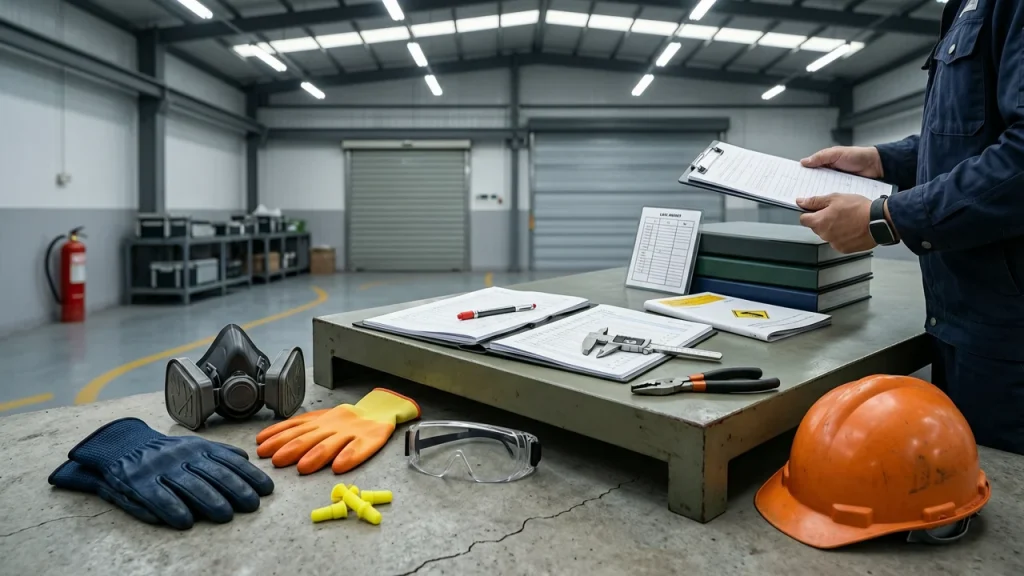
Personal Protective Equipment (PPE), as the last line of defense to protect workers, has always been a top priority in on-site safety inspections. Failure to provide equipment as required, use of non-compliant products, or improper wearing by employees are all typical violations, which are highly likely to be key targets in special inspections, facing risks of production suspension for rectification or heavy fines.
In on-site management, common PPE compliance misunderstandings often focus on the procurement and use stages. Some enterprises purchase cheap products lacking qualification certification to reduce costs; some employees remove protective equipment without authorization during operations due to poor comfort. These behaviors constitute substantial safety hazards, and in the event of an accident, the enterprise will bear unshirkable responsibility.
Taking head protection as an example, in scenarios with falling object risks such as construction or mechanical processing, enterprises must provide workers with safety helmets that meet national standards. EHS management personnel must not only ensure product compliance but also establish a regular inspection mechanism to promptly eliminate aged and deformed shells and harnesses, ensuring that impact absorption performance remains effective at all times.
For workshops with dust or high noise hazards, the selection of respiratory protection and hearing protection products must never rely solely on experience or intuition. Safety management personnel need to match employees with equipment of corresponding protection levels based on professional on-site hazard identification results, and conduct proper wearing training to ensure effective protection and reduce the risk of occupational diseases at the source.
In the face of increasingly strict "cracking down on illegal and non-compliant operations" actions, enterprises should shift PPE management from "passive response" to "proactive compliance." By strictly controlling procurement quality, improving distribution and training records, and strengthening on-site supervision and assessment, enterprises can build a stronger workplace protections, fulfill their primary responsibilities, and safeguard the life and health of employees.
News source:Ministry of Emergency Management of the People's Republic of China, 2026-07-06: “The Office of the State Council Work Safety Committee, the Central Political and Legal Affairs Commission, the Supreme People's Court, the Supreme People's Procuratorate, the Ministry of Public Security, and the Ministry of Justice jointly deployed the work of cracking down on illegal and non-compliant operations in work safety, 2026-07-06 08:43.” This article only interprets PPE knowledge based on public news topics.