A recent safety accident at a mining subsidiary that caused 1 death once again reminds us that the risks at non-ferrous mines and processing sites are complex. The details of the accident should be based on official notices, but regardless of the direct cause, PPE management cannot stop at “issuing it and considering protection done.”
Common risks in mines and workshops are not singular; dust, noise, mechanical injury, falls from height, vehicle injury, confined spaces, high temperatures, and chemical exposure may exist simultaneously. Risks at different work faces also change with temporary operations such as maintenance, bin cleaning, hot work, and lifting, and protection needs change accordingly.
From an EHS management perspective, PPE is usually the last line of defense, not the first. If a site relies only on PPE while neglecting ventilation and dust removal, equipment guarding, energy isolation, work permits, and on-site supervision, risks can still enter the work process through management gaps.
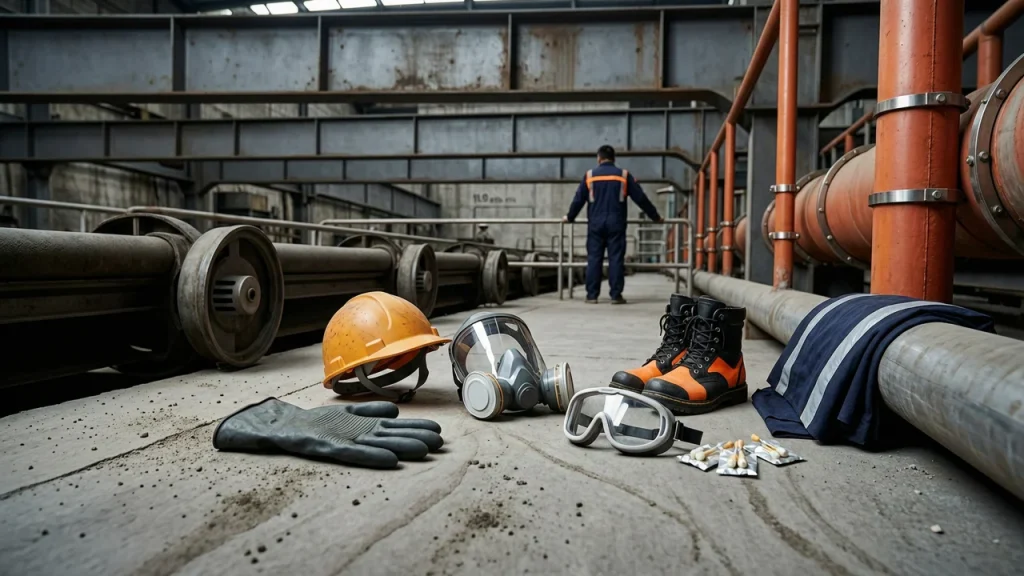
Procurement and safety management personnel can establish a checklist of “work task—risk point—protection need.” For example, when entering crushing, grinding, screening, or high-noise areas, head protection and hearing protection should be assessed; in operations involving dust, confined spaces, or possible harmful gases, respiratory protection should be assessed based on site conditions rather than issued uniformly by job position.
The key to on-site management is “knowing how to wear it, wearing it correctly, and wearing it consistently.” Whether the safety helmet chin strap is fastened, whether earplugs are inserted to the correct depth, and whether the respiratory protective mask fits the face all directly affect the actual protective effect. PPE also wears out, ages, becomes damp, or becomes contaminated, so a mechanism for replacement upon damage and regular replacement should be established to prevent employees from using ineffective equipment.
Training cannot stop at signing for confirmation. Employees should understand why PPE must be worn in a certain process, what consequences improper wearing can bring, and how to provide feedback when discomfort occurs. New employees, temporary workers, contractors, and rotated personnel also need to be included under the same standard, because accidents often occur in familiar processes, during schedule pressure, or in temporary operations.
For this accident, a more reliable review is not just writing “strengthen management,” but translating improvements into risk checklists, inspection forms, training records, procurement standards, and on-site inspections. When PPE moves from “being issued” to “being usable, verifiable, and replaced in a timely manner,” it can truly become a reliable part of the on-site safety system.
News source:Safety Management Network, 2026-07-29: "A safety accident occurred at a subsidiary of Xingye Silver-Tin, causing 1 death." This article only provides a PPE knowledge interpretation based on public news topics.