In many factories, hazardous work training easily starts with “talking about risks” and ends where it started. Work at height, hot work, confined spaces, and temporary electrical work are repeatedly emphasized, yet when problems actually occur on site, personnel may still fail to wear protective equipment, misjudge the environment, or skip confirmation steps. If training does not extend into pre-task checks, it is easily treated as a mere procedural formality.
The risks of hazardous work are often not caused by a single factor, but by the combination of environment, tools, personnel condition, and communication chains. For example, before entering a confined space, air quality, ventilation conditions, whether a standby attendant is present, and whether communication methods are reliable all affect the outcome. If training only says “pay attention” without specifying “under what circumstances you must stop,” on-site execution lacks clear judgment boundaries.
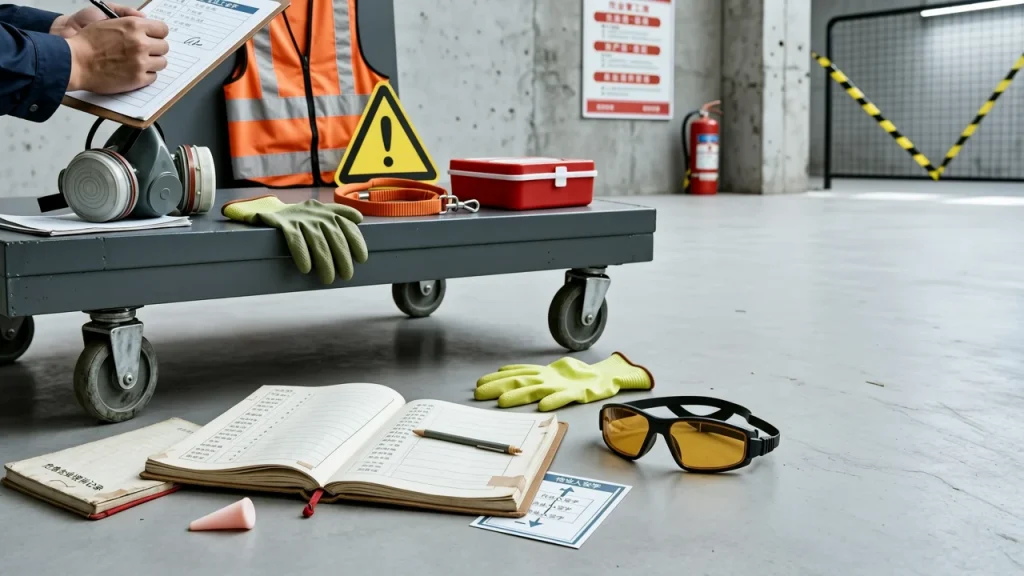
For safety managers, training objectives should be more specific: employees should be able to identify task risk points, recognize whether protective equipment is appropriate, and stop work and report in abnormal situations. Taking AEGLE's common head protection, respiratory protection, and hearing protection as examples, training should not only emphasize “wear it,” but also explain under what working conditions protection needs to be upgraded, and how improper wearing weakens protective effectiveness.
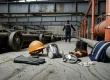
On-site management can introduce a “pre-task briefing” approach, where team leaders or task supervisors lead employees in confirming the day's tasks, personnel condition, tool condition, and protective equipment configuration. The briefing does not need to be long, but everyone should be able to answer three questions: Where are the risks? Is the protection sufficient? What to do in an abnormal situation? In this way, training transforms from a one-time classroom session into a daily pre-task recalibration.
Procurement and safety departments should also incorporate protective equipment configuration into training management. Different positions and different work stages require different protection; temporarily entering a confined space, handling dust, performing work at height, or being in a high-noise area can all change the risk level. Enterprises should establish a simple protection matching logic to prevent employees from choosing based on experience and to prevent on-site borrowing of equipment as a substitute for proper configuration.
The ultimate test of hazardous work training is behavioral change, not complete records. Enterprises can judge whether training has truly taken effect by observing pre-task checks, protective equipment wearing, stopping work in abnormal situations, and communication feedback. When employees begin to proactively say “this is not suitable to continue,” “this protection is not enough,” or “we need to confirm the environment first,” training has truly entered the on-site management closed loop.
News source:Safety Management Network, 2026-07-31: "Hazardous Work Safety Training...". This article provides PPE knowledge interpretation based solely on publicly reported news topics.