
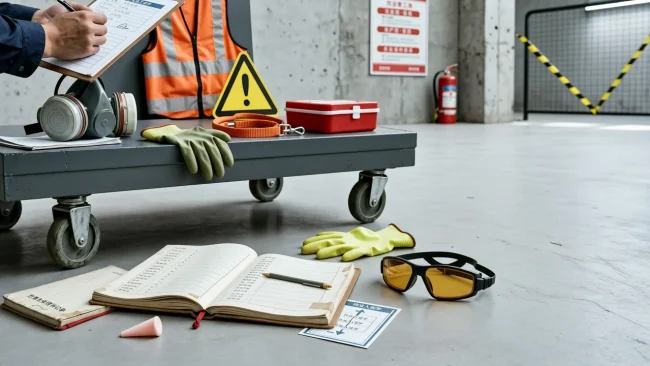
Why hasn't hazardous work training reached the front line?

Hazardous-operation training at factories often stops at discussing risks and does not extend to pre-task checks, leading personnel to miss protective equipment, misjudge the environment, or skip confirmation steps. The article notes that risks arise from the combination of environment, tools, personnel condition, and communication; training should clearly define the judgment boundaries for stopping work, and it recommends using pre-task briefings to confirm risks, protection, and abnormal-situation handling, incorporating protective equipment provisioning into training management, and verifying whether training takes hold by observing behavioral changes.
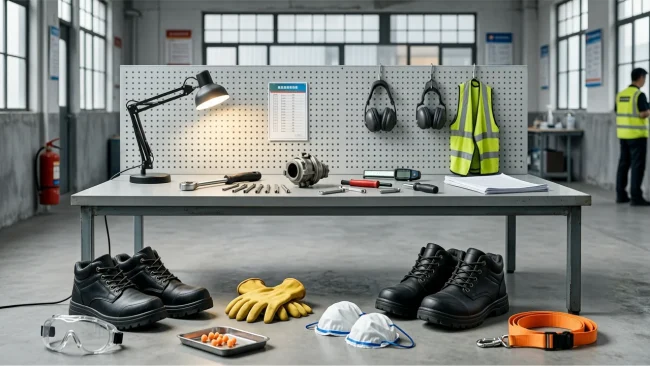
National Emergency Science Popularization Database Launched: How Can Enterprises Overcome the PPE Management Misconception of Prioritizing Allocation over Use?

Recently, the “National Emergency Management Science Popularization Database” was officially launched, providing authoritative educational resources for enterprises to optimize personal protective equipment management. The article notes that many factories have the misconception of “emphasizing procurement over training,” which prevents high-standard protective equipment from delivering its protective effect due to insufficient employee awareness. The article recommends that EHS teams use the database content to improve training chains for scenarios such as respiratory protection, head protection and hearing protection, and work with suppliers to build a closed-loop management system integrating selection, procurement, training and supervision.

Five Common Misconceptions About Fall-Arrest Harnesses and How to Select the Right Harness for Work at Height

Focusing on fall protection harnesses for work at height, the article sorts out five common misconceptions among enterprises, including treating them as ordinary labor protection supplies, neglecting regular inspection and service-life management, selecting solely on price, and ignoring correct donning and connection methods. Combining scenarios such as steel structure installation, the article explains the role of five-point full-body harnesses in distributing impact forces, and proposes selecting by working height, range of movement and body size, as well as establishing quarterly professional inspections and a systematic fall protection management process.