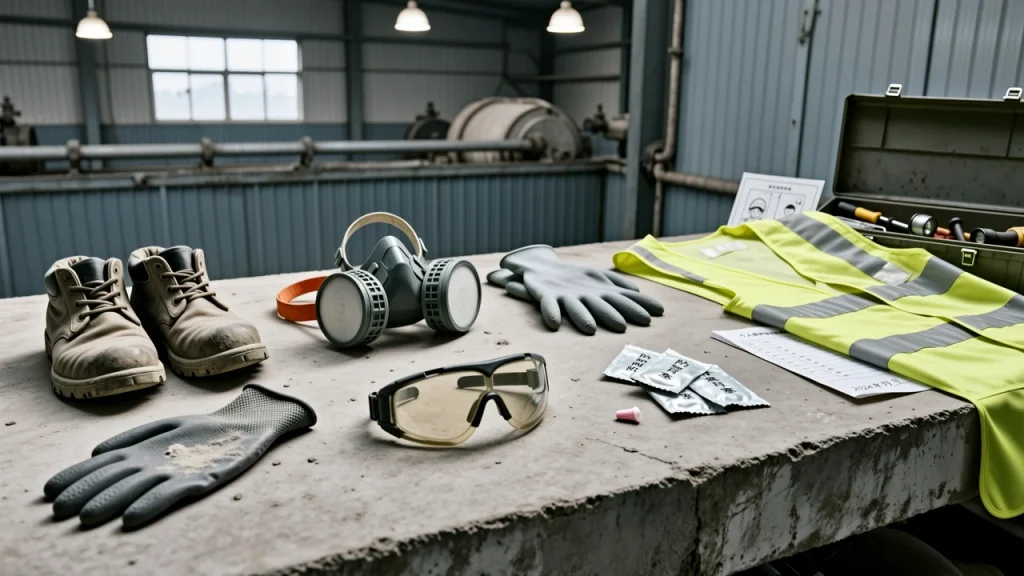
Recently, a safety accident occurred at a cement enterprise in Huizhou, Guangdong, resulting in 1 death; the specific cause is subject to the announcement by the relevant authorities. For factory EHS and corporate procurement, rather than dwelling on a single cause, it is more worthwhile to re-examine similar high-risk processes.
Cement production is typically accompanied by multiple risks such as dust, noise, mechanical injury, vehicle interactions, temporary maintenance, and confined space operations. PPE can reduce the consequences of injury, but it cannot replace engineering controls, work permits, on-site isolation, and personnel training; it is only one link in a multi-layered protection system.
A common misconception in many companies“ PPE management is stopping at ”buying everything according to the job position." Safety helmets, respiratory protection, and hearing protection are all issued, but there is a lack of continuous inspection as to whether they are worn on site, whether they fit properly, whether they are damaged, and whether they are replaced upon expiry. Meeting procurement quantities does not equal truly controlling risks.
Taking head protection in AEGLE's product categories as an example, cement plants have many vehicles, lifting operations, and temporary repairs. When employees move between passages, silos, and equipment platforms, the chin strap of the safety helmet, the condition of the shell, and wearing habits all affect protection effectiveness. Safety inspections should record “whether it is worn” and “whether it is worn correctly” separately.
Respiratory protection is also a common configuration direction in cement plants. Scenarios such as dusty environments, silo cleaning, maintenance, confined spaces, and handling abnormal spills and leaks place higher demands on fit, maintenance, replacement cycles, and personnel training. If employees feel stuffy, experience high breathing resistance, or poor fit, they often remove the equipment themselves, and the protection chain breaks.
Hearing protection also requires scenario-based configuration. Noise intensity varies in areas such as crushing, conveying, mills, fans, and vehicle traffic. The selection of earplugs and earmuffs, wearing methods, and cleaning and maintenance all affect actual protection. When procuring, one should not only look at unit price, but also consider job-specific noise exposure, work duration, and employee acceptance.
A more reliable approach is to incorporate PPE into the risk checklist rather than keeping it as a separate ledger. Which risks correspond to each position, which operations require additional protection, who is responsible for inspection, who is responsible for training, and who is responsible for recording replacements should all be written into on-site management actions. Supplier information, usage records, and behavior observations should become the basis for procurement re-evaluation.
The significance of accident review is not just to fill in a certain piece of equipment, but to check whether the site has formed a closed loop of “identifying risks, selecting the right equipment, teaching employees, continuous inspection, and timely replacement.” Using PPE correctly often reflects the true level of a company's safety management better than simply buying everything.
News source:Safety Management Network, 2026-07-19: "Accident at a Cement Enterprise in Huizhou, Guangdong Causes 1 Death." This article only provides an interpretation of PPE knowledge based on publicly reported news topics.