
The flood prevention and rescue site environment is complex—how should corporate EHS professionals handle PPE selection and stockpiling?

Recently, many places have experienced extreme weather, and emergency management departments urgently allocated tens of thousands of pieces of central disaster relief supplies to support local flood control and disaster relief. Against this background, the article focuses on risks at post-flood silt clearing and reconstruction sites, such as dust, mold spores, falling objects, and noise from drainage equipment, introduces key points for enterprise EHS in PPE selection for respiratory, head, and hearing protection, and recommends including suitable protective equipment in emergency reserve lists and regularly checking expiration dates and storage conditions.
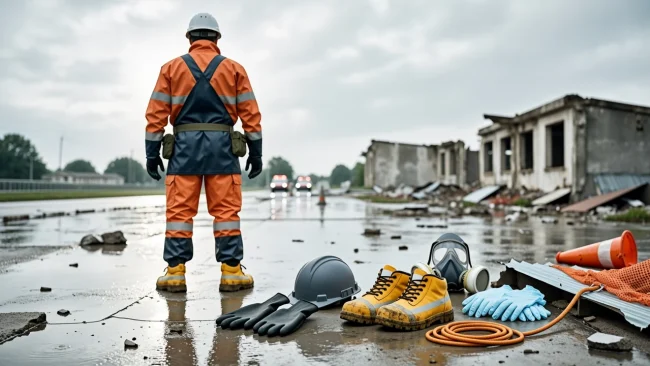
How to appropriately configure personal protective equipment for post-flood rescue and reconstruction sites?

The Ministry of Emergency Management recently allocated central disaster relief supplies to guide and support disaster relief and assistance work in Jilin, Heilongjiang, and other places. In view of risks at post-flood rescue and reconstruction sites during the flood season, such as damaged buildings, falling objects from heights, dust and mold, hazardous gases, and mechanical noise, the article introduces the scientific selection and wearing key points of safety helmets, respiratory protective equipment, and hearing protection equipment, and recommends that enterprise EHS departments include correct wearing of protective equipment as a key focus of on-site safety inspections.

The Golden Rule of On-Site Emergency Rescue: Why Is Self-Protection the First Priority?

Combining the topic of first aid for work safety accidents, the article points out that during the golden rescue time after an accident, on-site first aid must first assess hazard sources and ensure personal protection to avoid casualties caused by blind rescue; then scientific treatment procedures such as cardiopulmonary resuscitation and bleeding control and bandaging should be followed. Enterprises also need to regularly carry out first aid training and incorporate first aid supplies and emergency protective equipment into daily safety management.

PPE Planning Behind Disaster-Relief Supply Allocation: Lessons for Corporate Emergency Protection

Starting from the emergency response process of disaster relief supplies allocation, the article analyzes the configuration logic of PPE (Personal Protective Equipment) and, on that basis, explores how companies can build an emergency protection system, providing a reference for companies to reasonably equip protective supplies and improve emergency management during unexpected incidents.

Laboratory explosion accidents occur frequently—how can Personal Protective Equipment build the last line of defense?

Recent frequent laboratory explosion accidents have drawn attention to the role of personal protective equipment. Focusing on laboratory safety, this article discusses the function and limitations of personal protective equipment as the last line of defense in accidents and analyzes how to reduce injury risks through reasonable provision and use of protective equipment.

Three Common Mistakes in Selecting and Managing Harnesses for Work at Height

The article points out three major misconceptions in the selection and management of fall protection harnesses for working at height: treating harnesses as universal equipment while ignoring differences in scenarios, lacking regular inspection and maintenance records, and insufficient training for workers. Enterprises should select harnesses rationally based on working height, range of movement, and other factors, establish a full life-cycle management system covering routine inspection and disposal, and integrate it into the overall EHS protection system.